
New vs. Used Cars: The Long-Term Cost Battle
Published on Tháng 12 19, 2025 by Admin

Deciding between a new or used car is a significant financial choice. Many buyers focus on the initial price. However, the true cost of owning a vehicle extends far beyond the sticker price. Therefore, understanding the long-term financial implications is crucial for making the best decision. This article delves into the total cost of car ownership for both new and used vehicles over time. We will explore various factors that influence these costs, helping you make an informed choice that aligns with your budget and lifestyle.
When considering your next vehicle, it is wise to look beyond the immediate purchase. Thinking about the potential costs over a 4-year or 8-year period can provide valuable insight. As a result, you can better estimate the financial commitment involved. This proactive approach helps prevent unexpected expenses and ensures long-term satisfaction with your purchase.
Understanding Total Cost of Car Ownership
The total cost of car ownership encompasses more than just the purchase price. It includes all the expenses associated with maintaining and operating your vehicle. Therefore, a comprehensive understanding is vital. Key components include insurance, fuel, registration, and various associated costs. Moreover, the interest paid on a car loan significantly impacts the overall expense.
When estimating the true cost, it is essential to consider these key expenses. They can vary greatly depending on the vehicle and your driving habits. By factoring in these ongoing costs, you gain a more realistic picture of your financial responsibility. This holistic view is fundamental to smart car ownership.
Interest on Car Payments
The interest you pay on a car loan is a direct addition to the vehicle’s price. This cost depends heavily on the loan’s structure and the interest rate you secure. Longer loan terms typically result in paying more interest over time. Therefore, it is always advisable to shop around for the best interest rates possible to minimize this expense. Even a small difference in the annual percentage rate (APR) can translate into significant savings over the life of the loan.
Car Maintenance and Upkeep
Regular maintenance is a non-negotiable aspect of car ownership. Even brand-new cars with comprehensive warranties will require routine servicing. Conversely, used cars may present a higher likelihood of needing repairs sooner. Owner feedback and average maintenance cost reports can be invaluable resources for estimating these expenses. Common maintenance needs include oil changes, inspection services, tire rotations, and brake services. Furthermore, fluid and filter replacements, spark plug changes, and cooling system maintenance are also essential.
- Oil changes
- Inspection services
- Wheel rotation
- Wheel alignment
- Cooling system maintenance
- Spark plug replacement
- Fluid and filters replacement
- Battery replacement
- Timing belt replacement
- Basic brake service
- Air conditioning service
Planning for these regular services is crucial. Additionally, be prepared for potential unexpected repairs, especially with older vehicles. As a result, a dedicated maintenance budget is a wise financial strategy.
Car Insurance Costs
Car insurance is a mandatory expense. The cost and coverage levels can differ significantly. Different makes and models are insured at varying rates. Therefore, it is always a good idea to check with your insurance agent before purchasing a specific vehicle. You want to ensure you have the necessary coverage without overpaying. Remember, the cheapest policy might not offer adequate protection. Prioritize getting the coverage you need first, then look for competitive pricing.
Your insurance premiums are influenced by many factors, including your driving record, location, and the type of vehicle you own. For example, sports cars often have higher insurance rates than sedans. Similarly, vehicles with a history of theft may also incur higher premiums. Always get a personalized quote to understand the exact cost for your chosen car.
Fuel Efficiency and Costs
Every car has an estimated miles-per-gallon (MPG) rating for city and highway driving. To accurately assess the total cost of ownership, you must compare fuel expenses. This involves considering the MPG and the fuel tank capacity. The U.S. Government offers a fuel calculation tool to help compare vehicles. Gas efficiency can drastically alter your long-term expenses. A vehicle with lower MPG will cost more to fuel over time, even if its initial purchase price is lower.
For instance, a car that gets 20 MPG will consume significantly more fuel than a car that gets 30 MPG over the same distance. This difference becomes even more pronounced with higher annual mileage. Therefore, prioritize fuel efficiency when looking at the overall cost of a vehicle. This is a key factor in controlling everyday costs.
Depreciation: The Silent Killer of Value
Depreciation refers to the decrease in a vehicle’s value over time. This is one of the most significant hidden costs, especially for new cars. New vehicles depreciate rapidly in their first few years. Conversely, used cars have already undergone much of their initial depreciation. This means they tend to hold their value better in the short to medium term.
Understanding depreciation is crucial when you plan to sell or trade in your car. Researching the future value of different makes and models can help you make a more financially sound decision. For example, some brands and models are known for their excellent resale value, while others depreciate much faster. This knowledge can influence your choice between a new or used option.
Roadside Assistance
Unexpected issues like running out of gas or a flat tire can happen to any car. For older vehicles, especially used cars, breakdowns are more common. Roadside assistance can be a lifesaver in such situations. Some manufacturers offer this service for a limited time or mileage after purchase. Alternatively, you can often add emergency roadside assistance to your auto insurance policy, which can be more cost-effective. This coverage provides peace of mind and can save you money on towing and emergency repairs.
License and Registration Fees
Beyond the initial purchase, you will incur recurring costs for vehicle registration and licensing. These fees are determined by your state’s Department of Motor Vehicles (DMV). They are typically paid annually or biennially. These costs are usually predictable but do add to the overall ownership expense. Check with your local DMV for specific fee structures and renewal timelines.
New vs. Used Cars: A Long-Term Cost Comparison
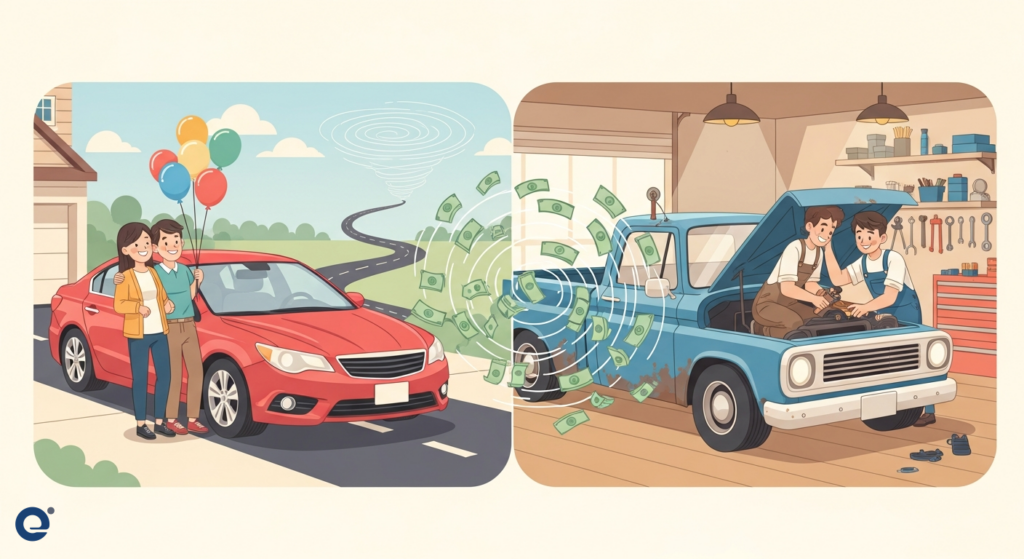
The debate between buying new and used hinges on several financial considerations over the vehicle’s lifespan. While new cars offer the latest features and peace of mind, used cars often present a more budget-friendly entry point. However, the long-term costs can paint a different picture.
The Depreciation Factor
New cars suffer from the steepest depreciation in their first few years. For example, a new car can lose 10-20% of its value in the first year alone and up to 50% in the first five years. This rapid loss of value means that if you were to sell a new car after just a few years, you would likely take a substantial financial hit. Used cars, on the other hand, have already experienced this significant drop. Therefore, their value depreciates at a much slower rate. As a result, the initial depreciation cost is significantly lower for used vehicles.
Maintenance and Repair Costs Over Time
New cars typically come with warranties that cover most repairs for the first few years. This significantly reduces unexpected maintenance expenses during that period. However, once the warranty expires, you will be responsible for all repair costs. Used cars, especially those that are several years old, are more prone to needing repairs. Parts wear out over time, and components may fail. Therefore, while the initial purchase price of a used car is lower, you might face higher repair bills as the car ages.
However, this is not always the case. A well-maintained used car can be very reliable. Conversely, a poorly maintained new car could develop issues. It is crucial to research the reliability ratings of specific models you are considering. Furthermore, a pre-purchase inspection by an independent mechanic is highly recommended for any used car. This inspection can identify potential problems before you buy.
For instance, if a new car’s warranty covers a major component for five years, you might not pay for repairs on that component. A used car of the same model, but out of warranty, could cost you thousands for a similar repair. Therefore, budgeting for potential repairs is essential when buying used. This is where understanding the total cost of ownership becomes critical. If you’re interested in mastering your money and avoiding unexpected expenses, you might find identifying cash flow leaks in your bank statements helpful.
Insurance Premiums
Generally, insuring a new car is more expensive than insuring a comparable used car. This is because new cars are worth more and are thus more costly to replace. Insurance companies factor in the vehicle’s value when calculating premiums. Therefore, if you are looking to save money on insurance, a used car can be a more economical choice. The type of coverage you need also plays a role; comprehensive and collision coverage, which protect against damage and theft, are typically more expensive for newer, higher-value vehicles.
Fuel Efficiency and Long-Term Savings
Both new and used cars come in a wide range of fuel efficiencies. Modern new cars often feature advanced fuel-saving technologies. However, many used cars, particularly newer models, can also offer excellent MPG. The key is to compare the specific MPG ratings of the vehicles you are considering. A car with a higher MPG will save you money on fuel over the long run, regardless of whether it’s new or used. This is a significant factor in controlling your day-to-day expenses.
When comparing, consider the average miles you drive annually. For example, if you drive 15,000 miles per year and one car gets 25 MPG while another gets 35 MPG, the difference in annual fuel cost can be substantial. A car that offers better fuel economy can offset higher initial purchase prices or even potential repair costs over time. This aligns with the principle of financial patience, where optimizing small costs leads to big wins.
The Impact of Ownership Duration
The length of time you plan to own a car significantly influences the total cost. According to AAA’s 2019 cost report, the median cost of car ownership averages about $9,200 per year if you own a car for five years. If you own a car for eight years, the average annual cost drops because you are likely to be free of loan payments for some of those years. However, owning a car for much longer than eight years can lead to significantly higher repair costs as the vehicle ages and requires more extensive maintenance.
Therefore, if you plan to keep a car for a very long time, the initial purchase price might become less critical than its long-term reliability and maintenance costs. A well-maintained used car could be a more economical choice for long-term ownership than a new car that rapidly depreciates and then incurs increasing repair bills after its warranty expires.
Factors Influencing Long-Term Costs
Several factors beyond the initial purchase price will shape your total cost of ownership. Understanding these elements is key to accurate budgeting and financial planning.
Vehicle Reliability and Brand Reputation
Some car brands and models are known for their exceptional reliability and durability. These vehicles tend to require fewer repairs and maintain their value better over time. Researching reliability ratings from consumer reports and automotive review sites can provide valuable insights. A reliable vehicle, whether new or used, will generally have lower long-term maintenance and repair costs. This is a critical consideration for any car buyer.
Driving Habits and Usage
How you drive and how much you drive impacts your car’s wear and tear. Aggressive driving, frequent short trips, and heavy towing can accelerate depreciation and increase maintenance needs. Conversely, gentle driving on highways for longer distances is generally easier on a vehicle. Higher mileage vehicles will naturally require more frequent maintenance and may experience repairs sooner. Therefore, your personal driving habits are a direct contributor to the total cost of ownership.
Market Conditions and Resale Value
The automotive market and the resale value of specific models play a role in the long-term cost. Some cars hold their value exceptionally well, meaning you will recoup more of your initial investment when you sell or trade them in. This is particularly true for popular makes and models in high demand. Conversely, vehicles with poor resale value will result in a higher net cost of ownership. Researching the projected resale value of a car can help you make a more informed decision.
When is a Used Car the Smarter Choice?
A used car is often the smarter choice for budget-conscious buyers. Firstly, the initial depreciation hit has already been absorbed by the first owner. Secondly, used cars generally have lower insurance premiums. Thirdly, the purchase price is significantly lower, making it more accessible. For example, you might be able to afford a higher trim level or a more luxurious model when buying used compared to buying new.
Moreover, if you are looking for a vehicle for occasional use or as a second car, a used option can be ideal. It provides transportation without the hefty financial commitment of a new vehicle. You can often find certified pre-owned (CPO) vehicles that offer a good balance of lower cost and added peace of mind, often including extended warranties. Understanding the true cost of owning a used vehicle is paramount here.
When is a New Car the Better Investment?
A new car might be the better choice if you prioritize the latest technology, safety features, and the peace of mind that comes with a full manufacturer’s warranty. New cars offer the latest advancements in fuel efficiency and safety. Additionally, they provide a pristine driving experience without any prior wear and tear. For those who plan to keep their vehicle for an extended period and want maximum reliability and the latest features, a new car can be a worthwhile investment.
Furthermore, manufacturers often offer attractive financing deals and incentives on new vehicles. These can sometimes offset the higher initial cost. If your budget allows and your priorities lie with cutting-edge technology and an untouched vehicle history, then a new car might be the right path for you. This aligns with the idea that sometimes, spending more upfront can lead to a better long-term experience, provided it’s a considered purchase.
Frequently Asked Questions (FAQ)
What is the biggest cost of owning a car?
The biggest costs typically include depreciation, fuel, insurance, and maintenance/repairs. Depreciation is often the largest single expense, especially for new cars in the first few years.
How much more does a new car cost than a used car in the long run?
While initial purchase prices are higher for new cars, the long-term cost difference depends heavily on depreciation, maintenance, and how long you keep the car. New cars lose value faster, but might have lower repair costs initially due to warranties. Used cars have lower upfront costs and slower depreciation, but may incur higher repair bills as they age.
Is it cheaper to buy a car or lease one in the long run?
Generally, buying a car is cheaper in the long run because you eventually own the asset. Leasing involves monthly payments without building equity, and you may face fees for exceeding mileage limits or wear and tear. However, leasing can offer lower monthly payments and the ability to drive a new car every few years.
What are hidden costs of car ownership?
Hidden costs can include things like unexpected repairs, increased insurance premiums over time, higher fuel costs due to poor MPG, registration fees, and the cost of accessories or upgrades. For used cars, potential costly repairs are a significant hidden cost to consider.
How can I estimate the total cost of owning a car before buying?
To estimate total cost, research fuel efficiency (MPG), insurance quotes for the specific model, expected maintenance schedules and costs (check model-specific forums or reports), and the vehicle’s depreciation rate. Also, factor in loan interest if applicable. Tools like the U.S. Government’s fuel calculation tool can be very helpful.
When should I consider a certified pre-owned (CPO) vehicle?
CPO vehicles are a good option if you want the benefits of a used car (lower price, slower depreciation) with added reassurance. They typically undergo rigorous inspections and come with an extended warranty, bridging the gap between new and standard used cars.
ACCOUNTANT EXPLAINS Should You Buy, Finance or Lease a New Car
Conclusion: Making the Financially Savvy Choice
Ultimately, the “true cost” of owning a used vehicle versus a new one in the long run is a nuanced equation. It depends on individual priorities, budget, and risk tolerance. New cars offer the allure of the latest features and a pristine history, often protected by warranties. However, they come with a steep depreciation curve and higher initial costs.
Used cars, on the other hand, provide significant upfront savings and slower depreciation. Yet, they may require a larger budget for potential maintenance and repairs. By carefully considering all the factors—depreciation, insurance, fuel, maintenance, and ownership duration—you can make a choice that best serves your financial well-being. Always remember to conduct thorough research on specific models and get quotes for insurance and potential repairs. This diligence ensures you are not just buying a car, but investing wisely in your transportation future. Making informed decisions about major purchases is key to long-term financial health, much like understanding how to define whether a major purchase is a real investment.
