
Slash Utility Bills: The Comfort-First Formula
Published on Tháng 12 18, 2025 by Admin
Are your utility bills climbing higher each month? You’re not alone. Many homeowners and renters struggle to balance comfort with the rising cost of energy. Fortunately, there’s a simple yet powerful formula to reduce your household expenses without sacrificing coziness. This guide will walk you through practical, low-effort strategies to significantly cut your utility bills. We’ll focus on smart adjustments and efficient technologies that make a real difference.
The average American household spends approximately $1,900 annually on utility bills. However, by implementing proven energy efficiency strategies, you can reduce these costs by 30% or more, potentially saving you $500 to $2,000+ per year. This approach not only benefits your wallet but also reduces your carbon footprint.
Understanding Your Energy Consumption
Heating and cooling systems are the biggest energy hogs in most homes. They account for a significant portion, around 52%, of your total energy bills. Therefore, optimizing your HVAC system’s performance is your highest impact area for savings. Even small adjustments can lead to substantial reductions over time.
The Power of Thermostat Management
Your thermostat is a key tool for managing energy use. By programming it correctly, you can save money and energy effortlessly. For example, each degree you adjust your thermostat can reduce energy costs by 3-4%.
Here’s an optimal daily schedule:
- 6:00 AM: Set to a comfortable temperature (68°F in winter, 78°F in summer).
- 8:00 AM: Set back the temperature 7-10 degrees when leaving for work or for extended periods.
- 5:00 PM: Return to a comfortable temperature about 30 minutes before arriving home.
- 10:00 PM: Reduce the temperature by 5-8 degrees for sleeping.
It’s important to note that heat pump owners should aim for more consistent temperatures rather than large setbacks. Large temperature swings can sometimes make heat pumps work harder. Consider using geofencing features on smart thermostats for automatic adjustments based on your location.
Maximizing Heating and Cooling Efficiency
Beyond thermostat settings, several other factors influence your home’s heating and cooling efficiency. Regular maintenance and simple DIY tasks can dramatically improve your system’s performance and extend its lifespan.
Regular HVAC Maintenance Pays Off
Regular maintenance can improve your HVAC system’s efficiency by 15-25% and significantly extend its life. This proactive approach prevents costly breakdowns and ensures optimal performance.
Here are some key maintenance tasks:
- Monthly: Replace or clean air filters. This is crucial and should be done every 30-90 days, depending on your filter type.
- Seasonally: Check and clear outdoor units of debris, leaves, and vegetation. Ensure indoor vents are open and unobstructed by furniture or curtains.
- Annual Professional Check-up: This should include cleaning evaporator and condenser coils, checking refrigerant levels, inspecting ductwork connections, testing thermostat calibration, and lubricating moving parts.
Ductwork Optimization: Sealing the Leaks
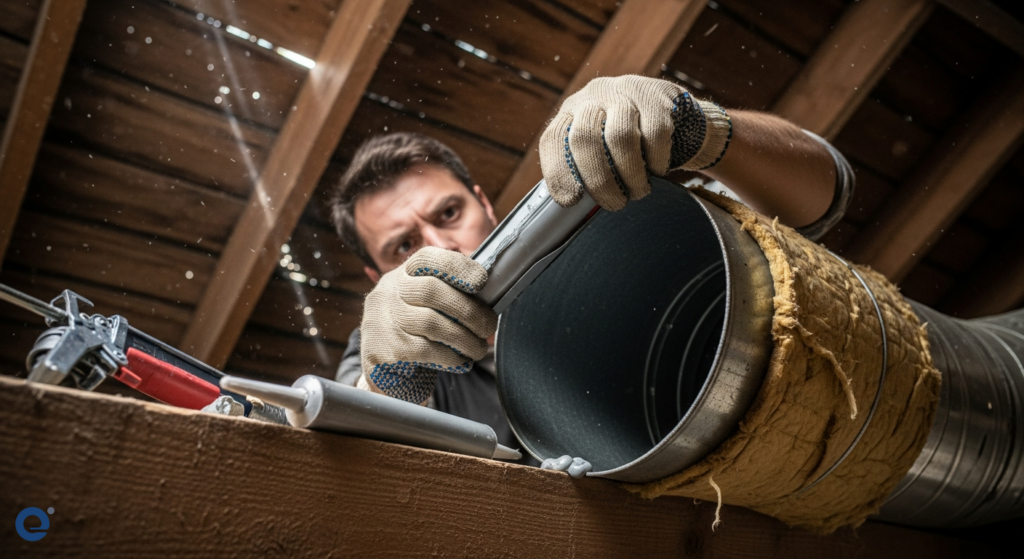
Leaky ducts are a major source of energy waste, potentially losing 20-30% of your conditioned air. Signs of duct problems include uneven temperatures between rooms, high energy bills despite moderate usage, excessive dust, and difficulty maintaining comfortable temperatures.
You can perform DIY duct sealing on accessible joints. Use mastic sealant or metal-backed tape (never standard duct tape). Focus your efforts on ducts located in unconditioned spaces like attics, basements, and crawlspaces. Properly sealed ducts ensure that the heated or cooled air reaches its intended destination efficiently.
Exploring Energy-Efficient Technologies
While behavioral changes and maintenance are essential, investing in energy-efficient technologies can offer even greater long-term savings. Heat pumps are a prime example of such an upgrade.
The Rise of Heat Pump Systems
Heat pumps offer an energy-efficient alternative to traditional furnaces and air conditioners. They work by transferring heat rather than generating it. During the cooling season, they move heat from your house to the outdoors. In the heating season, they move heat from the cool outdoors into your warm house.
Modern heat pumps can reduce electricity use for heating by up to 75% compared to electric resistance heating. High-efficiency models also dehumidify better, leading to more comfort and less energy usage in summer months. Heat pumps are a versatile solution for all climates.
Types of Heat Pumps
There are two main types connected by ductwork: air-to-air and ground-source (geothermal). Air-source heat pumps are the most common. They transfer heat between your house and the outside air.
Ductless air-source heat pumps, like minisplits, are excellent for homes without existing ductwork. These systems are ideal for zone heating and can significantly lower energy use compared to traditional methods. For homes with radiator heating, minisplits are a practical and efficient choice, especially in regions where ducted systems are less common.
Geothermal heat pumps, while having a higher upfront installation cost, offer superior efficiency by transferring heat between your house and the ground. The additional costs can be recouped through energy savings in 5 to 10 years, depending on local energy costs and incentives.
No-Cost Energy Wins for Immediate Savings
You don’t need to spend money to start saving. Many immediate actions require no upfront investment and deliver measurable results. These “no-cost” energy wins can save you $150-400 annually.
Eliminate Phantom Loads
Many electronics and chargers consume power even when turned off. These “vampire” devices can account for 5-10% of your residential electricity use. Unplugging them when not in use is a simple habit that adds up.
Target these common culprits:
- Cable boxes and DVRs
- Game consoles (especially those with “instant-on” modes)
- Computer peripherals and printers
- Phone chargers and power adapters
- Coffee makers and microwaves with digital displays
Maximize Natural Lighting
Open curtains and blinds during daylight hours, especially on south-facing windows in winter, to let in natural warmth and light. Keep windows and mirrors clean to maximize light reflection. Positioning your workspace near a window can reduce your need for artificial lighting by up to 40%.
Adjust Appliance Efficiency Settings
Your appliances have settings that can optimize their energy use. Lowering your water heater to 120°F can save 6-10% on water heating costs. Ensure your refrigerator is set between 37-40°F (freezer at 0-5°F). Enable power management and sleep modes on your computers. For dishwashers, use the eco-mode and air-dry settings whenever possible.
Improve Air Circulation
Ensure all vents and registers are unobstructed by furniture, curtains, or rugs. Ceiling fans can help. Set them to rotate counterclockwise in summer to create a cooling breeze and clockwise in winter to push warm air down. Remember, fans cool people, not spaces, so use them only when rooms are occupied.
Strategic Upgrades for Long-Term Savings
While no-cost and low-cost changes are effective, strategic upgrades can yield significant returns over time. Timing these investments wisely, especially with available incentives, can maximize your return on investment.
When to Consider Upgrading Your HVAC System
If your current HVAC system is over 12 years old for AC units or over 15 years old for heat pumps, it may be time to consider an upgrade. Modern systems are far more efficient than older models. Upgrading to an ENERGY STAR® certified heat pump can offer better efficiency and lower operating costs.
For homes with existing ductwork, replacing a furnace with a heat pump or installing a hybrid system is often straightforward. However, for homes without ductwork, minisplit systems are generally the best retrofit option. While the initial cost of major upgrades like heat pumps can be higher, they often have payback periods of 6-10 years with lifespans of 25+ years.
Leveraging Federal Incentives
Federal tax credits can significantly improve the economics of energy-efficient upgrades. In 2025, these include credits of up to 30% for solar panels, $2,000 for heat pumps, and $1,200 for insulation. These incentives can reduce payback periods by 2-4 years, making now an optimal time for major efficiency investments.
Frequently Asked Questions
How much can I realistically save on my utility bills?
By implementing a combination of thermostat optimization, phantom load elimination, appliance adjustments, and considering energy-efficient upgrades like heat pumps, you can realistically aim to reduce your utility bills by 30% or more annually. This could translate to savings of $500 to $2,000+ per year, depending on your current usage and local energy costs.
Are heat pumps effective in colder climates?
Yes, advancements in air-source heat pump technology now offer a legitimate space heating alternative even in colder regions. While furnaces have traditionally dominated in colder climates, modern heat pumps are increasingly efficient and a viable option. For optimal performance, especially in older homes, it’s recommended to weatherize your home to ensure maximum cost savings and comfort.
What is a “phantom load” and how do I stop it?
A phantom load, also known as vampire draw, is the electricity consumed by electronic devices and chargers when they are turned off but still plugged into an outlet. These devices can collectively account for a significant portion of your electricity bill. You can stop it by simply unplugging electronics and chargers when they are not in use.
How often should I change my air filter?
You should change or clean your air filter every 30-90 days, depending on the type of filter and your home environment (e.g., presence of pets or allergies). Regularly changing your air filter is a simple yet critical maintenance task that improves air quality and ensures your HVAC system runs efficiently.
Is it worth upgrading to a smart thermostat?
Yes, a programmable or smart thermostat can save you $100-200 annually through automated temperature adjustments. Many smart thermostats also offer features like geofencing and energy usage reports, giving you more control and insight into your home’s energy consumption.
9 Cheapest Ways To Heat Your Home This Winter
