
Profit-Driven Performance: A CPO’s Strategic Guide
Published on Tháng 2 3, 2026 by Admin

The Problem with Traditional Performance Reviews
For decades, the annual performance review has been the standard. However, this model is fundamentally broken. It is often a source of anxiety for employees and a burden for managers. More importantly, it fails to deliver meaningful business value.These reviews happen too infrequently. A single conversation per year cannot capture a full picture of an employee’s contributions. As a result, recent events often overshadow an entire year’s worth of work. This recency bias can lead to unfair assessments.Furthermore, traditional reviews are often disconnected from company goals. They focus on individual tasks rather than strategic impact. This creates a gap between what employees do every day and what the business needs to achieve.
Why Outdated Systems Cost You Money
Old systems are not just ineffective; they are actively expensive. They contribute to low morale and disengagement. Disengaged employees are less productive and more likely to leave. Therefore, the cost of replacing them is significant.Moreover, these systems fail to identify top performers accurately. They also don’t address underperformance in a timely manner. This means your best talent may feel undervalued, while struggling employees don’t get the support they need to improve. Ultimately, this stagnation hurts your company’s financial health.
What is a Profit-Driven Performance System?
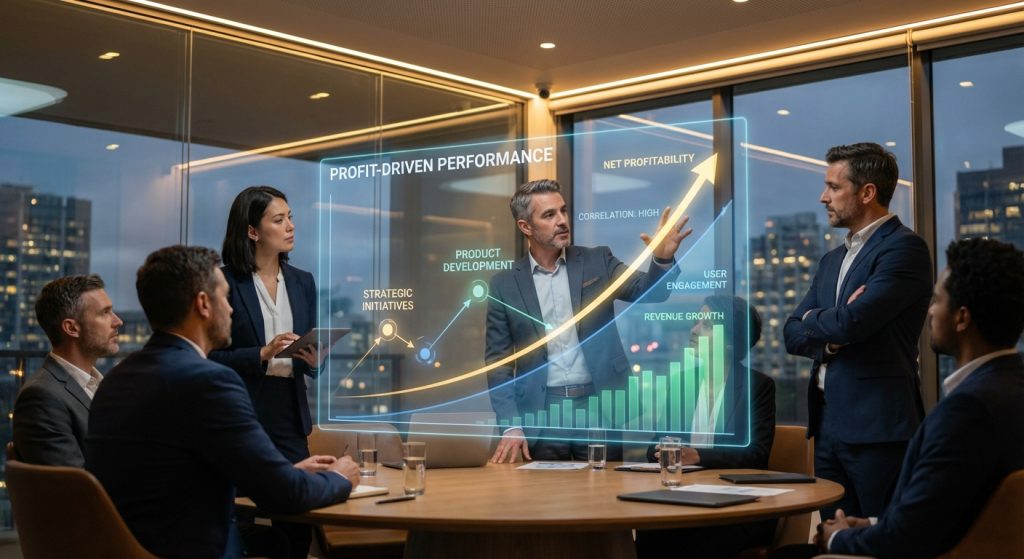
A profit-driven performance management system is a strategic framework. It directly links employee performance to the company’s financial success. Unlike traditional models, it is not a once-a-year event. Instead, it is a continuous cycle of goal setting, feedback, and development.This modern approach focuses on clarity and alignment. Every employee understands how their work contributes to the bigger picture. Therefore, they are more motivated to perform at their best. The system uses data to make informed decisions about talent, not just gut feelings.
Pillar 1: Continuous Feedback and Coaching
The first pillar is continuous feedback. This replaces the dreaded annual review with ongoing, constructive conversations. Managers become coaches, not just judges. They provide real-time guidance to help their teams succeed.These frequent check-ins can be brief and informal. For example, they could be a 15-minute chat every other week. The goal is to solve problems as they arise and celebrate small wins along the way. This builds trust and fosters a culture of continuous improvement.
Pillar 2: Aligning Goals with Business Outcomes
The second pillar is strategic alignment. This means ensuring every individual’s goals directly support the company’s objectives. A popular framework for this is Objectives and Key Results (OKRs).With OKRs, the company sets ambitious, high-level goals. Then, each department and individual creates their own OKRs that contribute to those goals. This creates a clear line of sight from daily tasks to company-wide success. As a result, employees feel a stronger sense of purpose and impact.
How Modern Systems Directly Impact the Bottom Line
Implementing a modern performance system is not just an HR initiative. It is a core business strategy with a clear return on investment (ROI). By focusing on engagement, retention, and development, you can create a more profitable organization.The connection is simple. When employees are engaged and aligned with company goals, they work more effectively. This leads to higher quality output, better customer service, and increased innovation. All of these factors directly contribute to revenue growth and profitability.
Increased Employee Engagement and Productivity
Engaged employees are the engine of a profitable business. They are more focused, more innovative, and more committed to quality. A profit-driven performance system fosters engagement by providing clarity, recognition, and opportunities for growth.When people see how their work matters, their motivation soars. Continuous feedback ensures they feel supported and valued. This positive environment naturally leads to higher levels of productivity across the board. In short, an engaged workforce is a productive workforce.
Reduced Employee Turnover
High employee turnover is incredibly expensive. It includes costs for recruitment, hiring, and training new staff. It also leads to lost productivity and knowledge. A strong performance management system is one of your best tools for retention.By providing regular coaching and clear career paths, you show employees you are invested in their success. This builds loyalty. When top performers feel recognized and have opportunities to grow, they are far less likely to look for jobs elsewhere. Effectively managing performance is key to slashing churn costs and improving retention.
Smarter Talent Development
A modern system provides valuable data on your workforce’s skills. It helps you identify both strengths and skill gaps. Consequently, you can make smarter decisions about training and development.Instead of guessing what training is needed, you can use performance data to create targeted programs. This allows you to upskill your team and cut hiring spend by promoting from within. Developing internal talent is almost always more cost-effective than recruiting externally. It also boosts morale and engagement.
Implementing Your New System: A Step-by-Step Guide
Transitioning to a new performance management system requires careful planning. It’s a significant cultural change that affects everyone in the organization. Follow these steps for a smooth and successful implementation.
Step 1: Secure Executive Buy-In
First, you must get support from the entire leadership team. Present a clear business case. Explain how the new system will drive profits, reduce costs, and support strategic goals. Use data to show the financial impact of engagement and retention. Without executive backing, the initiative is unlikely to succeed.
Step 2: Choose the Right Technology
Next, select the right software to support your new process. Modern performance management platforms can automate check-ins, track goals like OKRs, and gather feedback. The right tool makes the process seamless and provides valuable analytics. It helps managers and employees stay organized without creating extra administrative work.
Step 3: Train Managers and Employees
Change can be difficult. Therefore, comprehensive training is essential. Managers need to learn how to be effective coaches. They must understand how to give constructive feedback and set meaningful goals. Employees need to understand how the new system benefits them and what is expected.
Step 4: Launch, Measure, and Iterate
Finally, launch the new system. But the work doesn’t stop there. Continuously monitor its effectiveness. Gather feedback from managers and employees. Use key metrics like employee engagement, turnover rates, and goal achievement to measure ROI. Be prepared to make adjustments and refine the process over time.
Frequently Asked Questions
How is this different from a standard performance review?
The key difference is frequency and focus. Standard reviews are typically annual and backward-looking. A profit-driven system is continuous, forward-looking, and focuses on coaching and development. It directly links individual goals to company profits, which traditional reviews often fail to do.
What’s the role of technology in this system?
Technology is a critical enabler. Modern software platforms automate administrative tasks, facilitate continuous feedback, track goals (like OKRs) in real-time, and provide data analytics. This allows HR and managers to focus on the human element of coaching, not paperwork.
How do we measure the ROI of a new performance management system?
You can measure ROI through several key metrics. Track improvements in employee engagement scores, a reduction in voluntary turnover rates (especially among top performers), and increased productivity. You can also monitor goal attainment rates to see if strategic objectives are being met more effectively.
Won’t continuous feedback take up too much manager time?
Initially, it may feel like more work. However, short, frequent check-ins are more efficient than long, stressful annual reviews. These ongoing conversations prevent small issues from becoming big problems. As a result, managers spend less time firefighting and more time proactively coaching, which saves time in the long run.
Conclusion: Performance as a Profit Center
It is time to move beyond the outdated annual review. As a CPO, you have the power to champion a system that truly drives business success. By embracing continuous feedback, strategic alignment, and data-driven insights, you can build a high-performing culture.A modern performance management system engages your employees. It retains your top talent and develops your future leaders. Most importantly, it transforms the HR function from a cost center into a strategic partner that directly contributes to profitability. The future of performance management is here, and it is profitable.
