
Master VAT Reclaims: Your Guide to Boosting Cash Flow
Published on Tháng 1 31, 2026 by Admin

As a small business owner, you manage countless tasks every day. Therefore, handling complex finances like Value Added Tax (VAT) can feel overwhelming. However, mastering VAT reclaims is a powerful way to improve your company’s cash flow. It ensures you get back the tax you’ve paid on business purchases.
This guide simplifies the process. We will walk through what VAT reclaims are, what you can claim, and how to avoid common mistakes. As a result, you can feel more confident and in control of your finances.
Understanding the Basics: What is VAT Reclaim?
Firstly, let’s define what a VAT reclaim is. When your business is VAT-registered, you charge VAT on your sales to customers. This is called “output VAT.” Simultaneously, you pay VAT on goods and services you buy for your business. This is known as “input VAT.”
In most cases, you can reclaim the input VAT you’ve paid. Essentially, you deduct the total input VAT from the total output VAT you’ve collected. If you’ve paid more VAT than you’ve collected, you can reclaim the difference from the tax authorities. This refund is the VAT reclaim.
Input VAT vs. Output VAT Explained
Think of it this way. Output VAT is the tax your business collects on behalf of the government. You are simply holding onto it temporarily. On the other hand, input VAT is a business expense you incur when making purchases.
The goal of the VAT system is to tax the final consumer, not businesses. Therefore, the reclaim process allows you to offset the VAT you’ve paid against the VAT you’ve charged. This prevents the tax from cascading through the supply chain.
Why VAT Reclaims Matter for Your Cash Flow
For a small business, every penny counts. Successful VAT reclaims directly inject cash back into your business. This money can then be used for growth, inventory, or covering other operational costs. For instance, a large equipment purchase can involve a significant amount of VAT.
Getting that VAT back quickly can make a huge difference to your financial stability. Consequently, efficient VAT management is not just a compliance task; it is a vital part of your financial strategy. A well-managed process supports a healthier bottom line.
What Expenses Can You Reclaim VAT On?
Knowing which expenses are eligible for a VAT reclaim is crucial. The general rule is that you can reclaim VAT on purchases made exclusively for your business. If an expense is for both business and personal use, you can usually only reclaim the business portion.
Common Eligible Business Expenses
Most day-to-day business costs that include VAT are reclaimable. This creates many opportunities to reduce your tax bill. Here are some common examples:
- Professional Fees: Includes costs for accountants, solicitors, and other consultants.
- Software and Subscriptions: For example, accounting software, project management tools, and cloud services.
- Office Supplies: Stationery, printer ink, and other general office items.
- Travel Costs: VAT on fuel, hotel stays, and public transport for business trips.
- Marketing and Advertising: Costs for running campaigns, printing flyers, or online ads.
- Utilities: A portion of gas, electricity, and phone bills used for business purposes.
The Tricky Areas: Partially Exempt and Blocked Items
Unfortunately, not all VAT is reclaimable. Some items are “blocked,” meaning you cannot reclaim the VAT under any circumstances. For example, business entertainment for clients is often a blocked item. The specific rules can be complex and vary by country.
In addition, if your business sells “VAT exempt” goods or services, your reclaims may be restricted. This is because you don’t charge output VAT on these sales. As a result, you might only be able to reclaim a portion of your input VAT. It is vital to understand these nuances to ensure compliance.
Common Pitfalls That Trip Up Small Businesses
Navigating VAT reclaims can be a minefield. Many small business owners make simple mistakes that lead to rejected claims or even penalties. Awareness is the first step to avoiding these costly errors.
Poor Record-Keeping and Missing Invoices
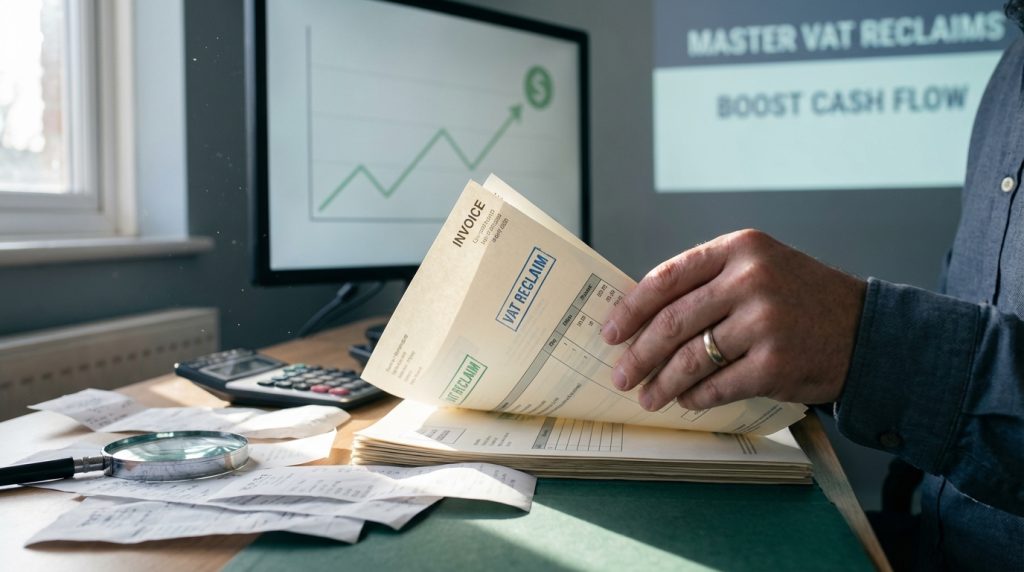
This is the most common pitfall. To reclaim VAT, you must have a valid VAT invoice for every single expense. This invoice must show the supplier’s VAT number, the date, your business details, and a clear breakdown of the VAT charged.
Without this documentation, your claim will be denied. Consequently, disorganized filing systems or lost receipts mean lost money. You are essentially throwing away potential cash refunds.
Misunderstanding Complex Rules
The rules around VAT can be incredibly complex. For example, knowing the difference between zero-rated, exempt, and standard-rated supplies is essential. Misclassifying an expense can lead to an incorrect claim.
Furthermore, rules can change. Tax authorities frequently update their guidelines, and staying on top of these changes is a challenge. A misunderstanding could lead you to over-claim or under-claim VAT, both of which can cause problems.
Missing Critical Deadlines
VAT returns must be filed by specific deadlines, which are usually quarterly. Missing a deadline can result in financial penalties that increase over time. It can also trigger a more thorough tax audit, creating more work and stress for you.
Setting up reminders and having a clear process is essential. Automating this process where possible can provide peace of mind and help you avoid unnecessary fines.
A Step-by-Step Guide to a Smoother Reclaim Process
While challenging, a systematic approach can make VAT reclaims much more manageable. Following these steps will help you stay organized and maximize your refund.
Step 1: Meticulous Record-Keeping
Firstly, establish a robust system for your finances. Use dedicated business bank accounts and credit cards to separate business and personal spending. This makes tracking expenses much easier.
Moreover, capture every receipt and invoice immediately. Use a scanning app on your phone or a dedicated document scanner. Store these digital copies in a secure, organized cloud folder. This ensures you never lose a vital document.
Step 2: Validate Every VAT Invoice
Do not just file an invoice away. Take a moment to check that it is a proper VAT invoice. It must contain all the required information. If an invoice is missing details, you must contact the supplier and ask for a corrected version.
This proactive step saves significant time and frustration later. It’s much harder to chase for a correct invoice months after the purchase.
Step 3: Use Digital Tools and Software
Modern accounting software is a game-changer for VAT management. Programs like Xero, QuickBooks, and FreshBooks can automate much of the process. They can link to your bank account, help categorize expenses, and generate VAT returns automatically.
Investing in this technology pays for itself by saving time and reducing errors. This kind of digital transformation is a key cost-saving strategy for any small business.
Step 4: Submit Your Return Correctly and On Time
Finally, double-check your VAT return before submitting it. Review the figures to ensure they look reasonable based on your business activity for the period. If you use an accountant, they will handle this for you.
Always submit your return and pay any owed VAT before the deadline. This simple discipline keeps you compliant and avoids penalties. A smooth tax process is a cornerstone of a healthy business and contributes to your overall strategy for strategic tax cost minimization.
Navigating International VAT Reclaims
If your business operates internationally, you may incur VAT in other countries. For instance, you might pay foreign VAT on hotel bills for a business trip or fees for attending a conference abroad. The good news is that this VAT is often reclaimable.
When Can You Reclaim Foreign VAT?
You can typically reclaim VAT from another country if you are not registered for VAT in that country. The expense must be for business purposes, and it must be an expense on which a local business could reclaim VAT.
For example, if you travel to Germany for a trade show, you can likely reclaim the VAT on your hotel and meals. However, the process for doing so is different from your domestic VAT return.
The Process for EU and Non-EU Claims
The process for reclaiming foreign VAT varies. Within the European Union, there is a standardized electronic system for businesses registered in other EU countries. This simplifies the process considerably.
For claims from non-EU countries, or for non-EU businesses claiming from an EU country, the process is often more paper-based and complex. It usually involves submitting specific forms directly to the tax authority of the country where you incurred the expense. Because rules vary, it is wise to consult the official guidance from the relevant tax authority or use a specialized reclaim service.
Frequently Asked Questions (FAQ)
Can I reclaim VAT on a car I bought for my business?
This is a complex area. Generally, you can only reclaim VAT on a car if it is used exclusively for business and is not available for private use. For many small businesses, this is a difficult condition to meet. However, VAT on commercial vehicles like vans is usually fully reclaimable.
What happens if I make a mistake on my VAT return?
If you discover a mistake, you should correct it as soon as possible. For small errors, you can often adjust your next VAT return. For larger or more serious errors, you must contact the tax authorities directly to inform them. Being proactive shows good faith and can help minimize penalties.
Do I need an accountant to handle my VAT reclaims?
While not mandatory, it is highly recommended, especially as your business grows. An accountant or a specialist VAT advisor can save you time, ensure compliance, and often identify reclaims you might have missed. Their fee is a business expense you can often reclaim VAT on.
Conclusion: Take Control of Your VAT
VAT reclaims may seem daunting, but they represent a real opportunity to improve your financial health. By understanding the fundamentals, keeping immaculate records, and using the right tools, you can turn a complex obligation into a valuable asset.
Start by implementing a clear system for your invoices and expenses. Consider investing in accounting software to automate the workload. Most importantly, do not be afraid to seek professional help. Taking control of your VAT is a crucial step toward building a more resilient and profitable business.
