
Protect Your Gems: Appraisal & Insurance Guide
Published on Tháng 1 28, 2026 by Admin

Why a Standard Appraisal Isn’t Enough
Many people get a single appraisal when they buy a piece of jewelry. They often think this document is sufficient for all purposes. However, this is a common and costly mistake for investors. A typical retail appraisal usually reflects the full retail replacement cost at that specific moment. This value is useful for a basic insurance policy but fails to capture the nuances of an investment-grade asset.The market for high-value gems and signed jewelry fluctuates. For example, the value of a rare colored diamond or a vintage Cartier piece can change significantly over just a few years. A standard, outdated appraisal will not reflect this growth. Consequently, in the event of a loss, you could be underinsured and face a substantial financial deficit. You need a process that treats your jewelry like the serious asset it is.
The Crucial Role of Expert Jewelry Appraisal
A professional appraisal is the foundation of your asset protection strategy. It provides an accurate, defensible valuation that is essential for obtaining the right insurance coverage. Without it, you are simply guessing at your asset’s worth. Therefore, seeking an expert is a non-negotiable step for any serious investor.
Finding the Right Appraiser
Choosing an appraiser requires due diligence. Firstly, look for a graduate gemologist (GG) from an institution like the Gemological Institute of America (GIA). In addition, credentials from appraisal organizations like the American Society of Appraisers (ASA) are also crucial. These certifications ensure the appraiser has rigorous training in both gemology and valuation theory.Furthermore, the appraiser must be independent. This means they should not be involved in buying or selling jewelry. An independent appraiser has no conflict of interest. Their sole focus is to provide an accurate and unbiased valuation of your item. This independence is critical for both insurance purposes and your own peace of mind.
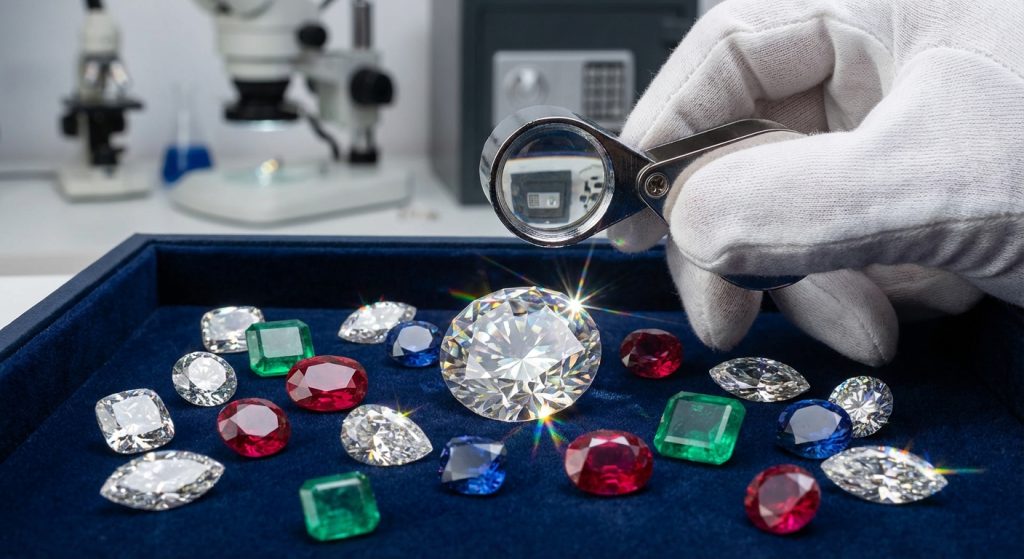
What a Comprehensive Appraisal Report Includes
A proper appraisal is a detailed, multi-page document. It goes far beyond a simple description and price. A comprehensive report should always include the following elements:
- Detailed Description: This includes precise measurements, weights, and markings.
- The 4Cs: A full analysis of the gem’s Carat, Color, Clarity, and Cut.
- Origin and Treatments: Information on the geographic origin of the stone and any enhancements it has undergone.
- Quality of Craftsmanship: An assessment of the metalwork and setting.
- High-Quality Photographs: Clear images from multiple angles.
- Stated Value: A clear definition of the value, such as Replacement Value or Fair Market Value.
This level of detail is necessary to establish the unique identity and worth of your asset.
How Often Should You Re-appraise?
The value of precious metals and gemstones is not static. Therefore, your appraisals need to be current. Most experts recommend having your high-value jewelry re-appraised every two to three years. For exceptionally rare or volatile assets, you might even consider a more frequent schedule.Regular updates ensure your insurance coverage keeps pace with market values. If your collection appreciates significantly, an old appraisal could leave you dangerously underinsured. Consequently, a small investment in regular appraisals provides a powerful safety net for your portfolio.
Optimizing Your Jewelry Insurance Coverage
With an accurate appraisal in hand, you can now secure the right insurance. However, not all policies are created equal. Choosing the wrong coverage can be just as damaging as having no coverage at all. Investors must look beyond standard options and find a policy tailored to high-value assets.
Choosing the Right Policy Type
You generally have two main options for insuring jewelry. The first is adding a rider or floater to your existing homeowners’ policy. While convenient, this often comes with limitations on value and coverage specifics. It may be suitable for modest collections but is rarely the best choice for serious investors.The second, and often superior, option is a standalone jewelry insurance policy from a specialized insurer. These companies understand the unique risks associated with high-value items. Moreover, their policies offer broader protection and more favorable terms. This specialized approach provides a higher level of security, much like how one might seek specific coverage for other valuable collections. The principles are similar to those in our guide on how to optimize your art insurance costs.
Key Policy Features to Scrutinize
When reviewing a policy, you must pay close attention to the fine print. Firstly, understand the difference between “Agreed Value” and “Replacement Cost.” An Agreed Value policy guarantees a fixed cash payout of the appraised amount in case of a total loss. This is ideal for investors because it locks in the value. Replacement Cost policies, on the other hand, only promise to replace the item with one of “like kind and quality,” which can be subjective.In addition, look for other critical features:
- Mysterious Disappearance: This covers you if an item is lost without a clear explanation.
- Worldwide Coverage: Ensures your pieces are protected even when you travel.
- Repair Options: Check if you have the right to choose your own jeweler for repairs.
- Cash Payout Option: The flexibility to receive a cash settlement instead of a replacement is highly valuable.
Strategies to Lower Your Premiums
While comprehensive coverage is essential, there are ways to manage costs. For example, opting for a higher deductible can significantly lower your annual premium. Insurers also offer discounts for proactive risk management. Storing your jewelry in a bank vault or a high-quality home safe can lead to substantial savings.Furthermore, having a central station-monitored alarm system in your home can reduce your rates. Building a long-term relationship with your insurer and maintaining a claim-free history can also result in better pricing over time. These strategies allow you to maintain robust protection without overpaying. Similarly, understanding market dynamics is key, as we discuss in our article on your watch as an asset.
Documenting Your Collection for Maximum Protection
An appraisal and an insurance policy are your primary lines of defense. However, thorough personal documentation provides an invaluable backup. In the event of a claim, having a detailed personal inventory can expedite the process and prevent disputes. This is a simple step that adds a powerful layer of security.Start by creating a detailed inventory list of your entire collection. For each piece, include the description, purchase date, purchase price, and the current appraised value. Then, take high-resolution digital photos and videos of every item. Capture the pieces from multiple angles, including any identifying marks or signatures.Finally, organize all your documents securely. Keep digital copies of your appraisals, receipts, and gemological certificates in a cloud-based storage service. You should also maintain a physical copy in a fireproof safe or a separate location, like a safe deposit box. This redundancy ensures you can access your proof of ownership no matter what happens.
Frequently Asked Questions (FAQ)
What’s the difference between fair market value and replacement value?
Replacement value is the cost to replace an item with a new, similar one at retail prices. It’s typically higher. Fair market value, on the other hand, is the price a willing buyer would pay a willing seller. For insurance, you almost always want a policy based on replacement value to ensure you can fully replace the lost item.
Does my homeowners’ policy cover my engagement ring?
Most standard homeowners’ policies have very low limits for jewelry theft, often just $1,500 to $2,500. This is usually not enough to cover a valuable engagement ring. Therefore, you need to add a special “rider” or “floater” to your policy or get a separate jewelry insurance policy to be fully covered.
How do I insure a piece I inherited without a receipt?
This is precisely where a professional appraisal is essential. An independent appraiser will evaluate the inherited piece and create a detailed report establishing its identity and replacement value. This appraisal document then serves as the basis for your insurance policy, acting in place of a purchase receipt.
Can I get a discount for storing my jewelry in a bank vault?
Yes, absolutely. Most specialized jewelry insurers offer significant premium discounts if you store items you don’t wear frequently in a bank safe deposit box. Because the risk of theft is dramatically lower, the insurer passes those savings on to you. Be sure to inform your agent about your storage habits.
