
Clean Signals: Token Mapping to Cut Broadcast Artifacts
Published on Tháng 1 25, 2026 by Admin
What Are Broadcast Artifacts and Why Do They Matter?
Broadcast artifacts are unwanted distortions in audio or video signals. They appear during digital processing, especially compression and transmission. For instance, you might see blocky squares in fast-moving scenes or strange color bands in smooth gradients. These are classic examples of artifacts.These glitches are more than just an annoyance. In fact, they directly impact viewer satisfaction and your station’s reputation. A clean, crisp signal feels professional and trustworthy. On the other hand, a stream full of artifacts can make viewers tune out. Therefore, minimizing them is a top priority for any broadcast operation.
Common Types of Artifacts
You likely encounter various artifacts daily. Some of the most common include:
- Blocking: The video appears to be made of small squares, especially in areas with high motion or low detail.
- Banding: Smooth gradients, like a blue sky, show distinct bands of color instead of a seamless transition.
- Mosquito Noise: A shimmering, blurry effect appears around the edges of objects, particularly in highly compressed video.
- Audio Clipping: Sound becomes distorted and harsh when the signal level is too high.
Each of these issues stems from how digital data is handled.
Understanding Tokens in Modern Broadcasting
To grasp token mapping, you first need to understand tokens. In simple terms, a token is a small piece of digital information. Think of it as a single building block. In AI and modern codecs, video frames and audio clips are broken down into thousands of these tokens. Each token represents a tiny portion of the overall picture or sound.This process is called tokenization. It allows complex media to be analyzed, compressed, and reconstructed by computer systems. For example, one token might represent a patch of blue sky, while another represents the edge of a person’s face. The system then works with these tokens instead of massive, raw video files. This makes processing much more efficient.
Introducing Robust Token Mapping: The Core Concept
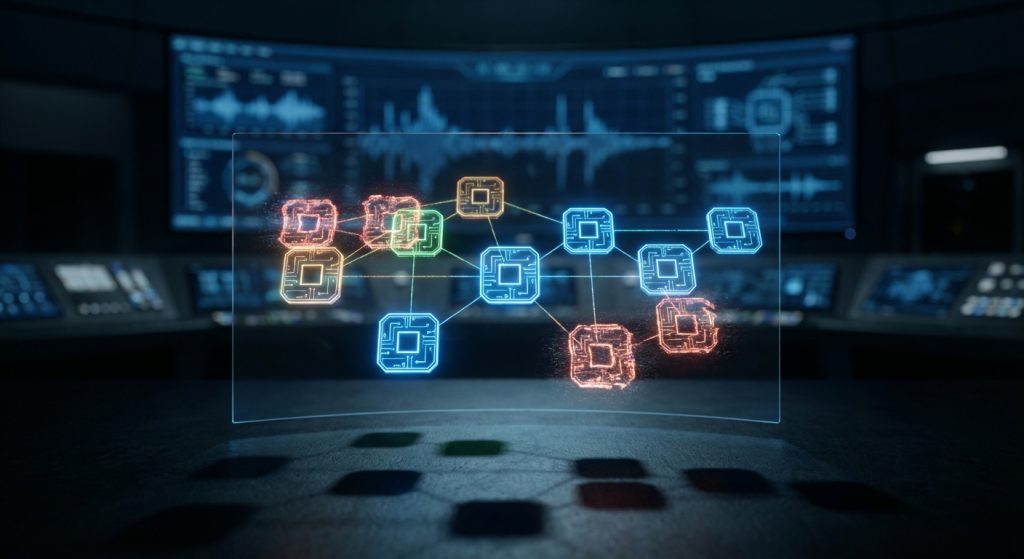
Token mapping is the blueprint that tells a system how to organize and interpret all these individual tokens. It’s like a detailed instruction manual for reassembling the video or audio from its basic parts. A “robust” map is one that is highly efficient, accurate, and resilient to errors.Imagine organizing a warehouse. A robust mapping strategy is like having a perfect inventory system where every item has a specific, logical place. You can find and retrieve items quickly with no mistakes. A poor mapping strategy, however, is like a chaotic warehouse where things are misplaced, leading to delays and errors. In broadcasting, these errors show up as artifacts.
Why Robustness is Key
A robust token map ensures that the most important visual and auditory information is preserved. It intelligently allocates data, giving more detail to complex areas like faces and less to simple backgrounds. Furthermore, it helps the system predict and reconstruct missing information if data is lost during transmission. This resilience is critical for live broadcasting and streaming over unreliable networks.
How Poor Token Mapping Creates Artifacts
When the token map is not robust, problems arise quickly. The system struggles to interpret the data correctly, which forces it to make compromises. These compromises are the direct cause of the artifacts you see on screen.
Inefficient Data Representation
A poorly designed map wastes data. It might use too many tokens for simple areas or not enough for complex ones. This inefficiency means the overall file size is larger than necessary. To meet bandwidth targets, the system must then apply aggressive compression. As a result, details are lost, and you see classic compression artifacts like blocking and mosquito noise.
Semantic Misinterpretation
Modern systems try to understand the *meaning* (or semantics) of the content. A good map helps the system identify a face, a tree, or text on screen. However, a poor map can cause misinterpretations. The system might mistake a subtle film grain for noise and scrub it away, creating a plastic, unnatural look. This is where semantic token mapping for lifelike voice generation and video becomes crucial, as it ensures the AI understands the content’s context.
Synchronization and Timing Errors
Tokens for audio and video are processed separately but must be perfectly synchronized. A flawed token map can introduce timing delays between the audio and video streams. This can lead to lip-sync issues. In addition, it can cause jerky motion or stuttering playback because video tokens are not being decoded and displayed at the correct pace.
Practical Strategies for Robust Token Mapping
Improving token mapping isn’t just a theoretical exercise. There are practical technologies and strategies that broadcast technicians can use to reduce artifacts and enhance signal quality. These approaches focus on creating smarter, more adaptive tokenization processes.
Leveraging Neural Codecs
Traditional codecs like H.264 follow rigid rules for compression. In contrast, modern neural codecs use AI to create highly efficient token maps. They analyze the content and decide the best way to represent it, often achieving significantly better quality at the same bitrate. As a technician, advocating for and learning to manage these high-performance neural codecs for video delivery is a step toward future-proofing your workflow. These systems are at the forefront of artifact reduction.
Implementing Adaptive Tokenization
Adaptive tokenization is a dynamic process. Instead of using a fixed token size, the system adjusts based on the content of the frame. For example, it can use smaller, more detailed tokens for a news anchor’s face and larger, less detailed tokens for the simple blue background behind them. This intelligent allocation of data ensures that detail is preserved where it matters most, preventing artifacts without bloating the bitrate.
Building in Error Correction
No transmission path is perfect. Data packets get lost. Robust token mapping anticipates this by building in redundancy and error correction. The map might contain information that allows the decoder to intelligently guess or reconstruct missing tokens based on surrounding data. This makes the stream far more resilient to network hiccups, which is essential for live sports and news broadcasts.
The Future: AI and Automated Artifact Reduction
The role of the broadcast technician is evolving. In the future, AI will play an even larger role in managing signal quality. We are moving toward systems that can monitor streams in real-time, detect emerging artifacts, and automatically adjust token mapping parameters on the fly to correct them.Your job will shift from manual tweaking to overseeing these intelligent systems. You will need to understand the principles of token mapping to set policies, diagnose complex issues, and ensure the AI is performing optimally. Consequently, embracing these new concepts is not just about improving quality today; it is about staying relevant in the broadcast industry of tomorrow.
Frequently Asked Questions (FAQ)
Is token mapping the same as video compression?
Not exactly, but they are closely related. Token mapping is a core part of how modern AI-driven compression (neural codecs) works. Think of token mapping as the intelligent strategy, and compression as the end result of applying that strategy to reduce file size.
Do I need to be a programmer to work with token mapping?
No. While programmers develop the underlying algorithms, technicians will interact with these systems through user interfaces. Your role is to understand the principles to configure the equipment, monitor its performance, and troubleshoot issues, much like you do with current broadcast gear.
How does this apply to live broadcasting?
It is incredibly important for live broadcasting. Robust token mapping allows for higher quality video at lower latencies and bitrates. Its error resilience is also critical for maintaining a stable stream over public internet connections or satellite links, where packet loss can be a problem.
What’s the first step to implementing better token mapping?
The first step is to start evaluating and understanding the next generation of broadcast equipment. Look for encoders, transcoders, and processing gear that use AI or machine learning. Ask vendors about their approach to compression and artifact reduction. Staying informed is the best way to prepare.
