
Precision Tokens: Upscale Images with Flawless Detail
Published on Tháng 1 24, 2026 by Admin
The Challenge of High-Quality Upscaling
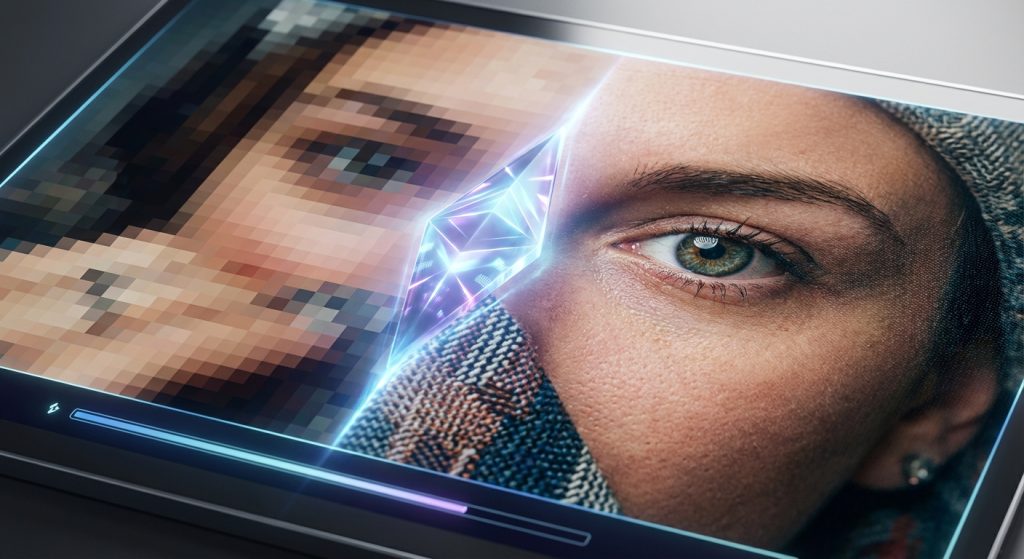
Image upscaling is the process of increasing an image’s resolution. For instance, you might turn a small 512×512 pixel image into a large 2048×2048 one. The core challenge is filling in the new pixel data intelligently. The AI must guess what details should exist in the higher-resolution version.Unfortunately, this process is difficult. Poor upscaling introduces several unwanted problems. These issues can ruin the final image quality.
Common Upscaling Problems
The most frequent issue is blurriness. The model might average out pixel colors, resulting in a soft, out-of-focus look. In addition, another problem is the creation of artifacts. These are unnatural patterns or textures that were not in the original image.Finally, models can lose fine details. For example, the subtle texture of fabric, the strands of hair, or the sharp edges of a building can disappear. This loss of fidelity makes the upscaled image feel flat and unrealistic.
Understanding Tokens in AI Image Generation
To grasp precision windows, you must first understand tokens. AI models, especially transformers, do not see images as a single entity. Instead, they break down images into smaller, manageable pieces called tokens or patches. Think of it like creating a mosaic.Each token represents a small section of the image. The model analyzes the relationship between these tokens to understand the overall picture. For example, it learns that a token representing an eye is usually next to a token representing a nose. This contextual understanding is fundamental to how generative AI works.
How Standard Token Windows Work
During upscaling, the AI looks at a group of tokens from the low-resolution image. This group is its “context window.” Based on this window, it generates a higher-resolution version of that specific area. Then, it slides the window over to the next section and repeats the process.The problem is that standard windows are often fixed in size and scope. They treat all parts of the image with equal importance. As a result, the model can miss the subtle details that define high quality.
Precision Token Windows: A Focused Solution
Precision token windows offer a more intelligent approach. Instead of using a generic, one-size-fits-all window, this technique allows the model to be more selective. It can dynamically adjust the size and focus of its attention. Therefore, it can dedicate more computational power to complex areas of the image.This is like an artist using a tiny brush for intricate details and a larger brush for broad backgrounds. The AI learns to allocate its resources where they matter most.
The Mechanism of Precision Windows
So, how does this work in practice? A precision windowing system might use a multi-pass approach. On the first pass, it performs a quick, general upscale. Subsequently, a secondary analysis identifies areas with high complexity, such as faces, text, or intricate patterns.In the second pass, the model uses smaller, more focused token windows on these complex areas. It dedicates more processing to reconstructing these details accurately. This adaptive focus prevents the model from smudging important features. In addition, it ensures that sharp lines remain sharp and textures stay detailed. This approach is central to many modern AI upscaling for perfect high-res photos.
Key Benefits for Software Developers
Implementing precision token windows in your graphic software offers significant advantages.
- Superior Detail Preservation: Your users will notice that fine textures, such as wood grain or skin pores, are maintained beautifully.
- Reduced Artifacts: By focusing correctly, the model is less likely to hallucinate strange patterns or create blocky distortions.
- Better Edge Definition: Edges between objects and backgrounds will be sharper and more natural, avoiding the common “glowing” or blurry halos.
- Higher Perceived Realism: Consequently, the final images look more photorealistic and professional, which enhances user satisfaction.
Implementing Precision Windows in Your Application
Adopting this technique requires careful consideration. It is not a simple switch you can flip. You must think about the algorithmic design and the performance implications for your software.Firstly, you need an AI model capable of adaptive processing. This often means using more advanced transformer architectures or custom-trained models. The model must be able to handle variable input sizes or have a mechanism for identifying complex regions.
Algorithmic and Performance Trade-offs
Precision upscaling is more computationally expensive than standard methods. Analyzing the image to find complex areas adds an extra step. Moreover, processing these areas with smaller windows can increase processing time.Developers must find a balance. For example, you could offer different quality settings. A “fast” mode might use standard windows, while a “high quality” mode enables precision windowing. Furthermore, efficient implementation is crucial. Techniques like smart caching for AI visuals can help manage the computational load by reusing calculations for similar image patches.
The Future is Detailed
The field of AI image generation is moving incredibly fast. As models become more powerful, the ability to control their focus will become even more important. Precision token windows are a key step toward a future where AI-generated and upscaled media are indistinguishable from reality.For developers, mastering these techniques is a competitive advantage. It allows you to build software that delivers the exceptional quality your users demand. By focusing on the details, you can create tools that empower creativity and produce breathtaking results.
Frequently Asked Questions
What is a token in the context of AI image upscaling?
A token is a small patch or section of an image. AI models break images down into these tokens to process them more effectively. The model analyzes the relationships between tokens to understand the image’s content and structure.
How are precision token windows different from standard ones?
Standard token windows are typically a fixed size and treat all parts of an image equally. In contrast, precision token windows are adaptive. They can change size and focus on complex areas, dedicating more computational resources to preserve fine details.
Does using precision token windows slow down the upscaling process?
Yes, it generally does. The process involves extra steps, such as analyzing the image for complexity and performing more intensive processing on detailed areas. However, the significant improvement in quality often justifies the additional time.
Can this technique be used for video upscaling?
Absolutely. While more complex, the same principles apply. For video, the model must also consider temporal consistency between frames. Precision windows can help ensure that details remain stable and do not flicker from one frame to the next.
