
Mastering Hybrid Cloud Budgets for Peak Efficiency
Published on Tháng 1 15, 2026 by Admin
Hybrid cloud environments offer great flexibility. However, they also present budget challenges. Managing costs across different platforms is complex. This article provides a guide for VPs of Infrastructure. It focuses on optimizing hybrid cloud budgets.
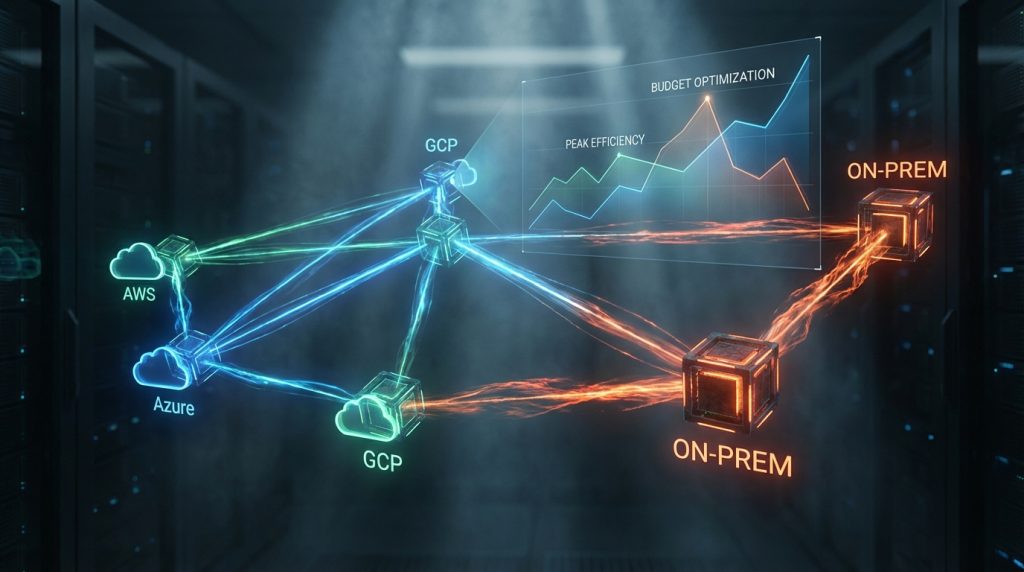
The Hybrid Cloud Cost Conundrum
Hybrid cloud combines public cloud services with private cloud or on-premises infrastructure. This offers benefits. It provides scalability and agility. It also allows for data sovereignty. However, it creates a complex cost landscape. Different pricing models exist. These vary by provider and service. Therefore, tracking and controlling expenses becomes crucial.
Many organizations struggle with budget overruns. This is often due to a lack of visibility. They also face challenges with inefficient resource allocation. Understanding where money is spent is the first step. Then, you can begin to optimize.
Key Strategies for Hybrid Cloud Budget Optimization
Optimizing hybrid cloud budgets requires a multi-faceted approach. It involves strategic planning, diligent monitoring, and continuous refinement. Let’s explore key strategies.
1. Gain Comprehensive Visibility
You cannot manage what you cannot see. Therefore, achieving full visibility into your hybrid cloud spend is paramount. This means understanding costs across all environments. This includes public cloud, private cloud, and on-premises assets.
Tools can help aggregate cost data. They provide a unified view. Look for solutions that offer granular cost attribution. This helps identify spending by department, project, or application. Mastering granular cost attribution logic is a key FinOps practice. It ensures accountability. It also highlights areas for potential savings.
2. Implement Robust Cost Governance
Cost governance sets the rules for cloud spending. It ensures alignment with business objectives. This involves establishing clear policies. It also requires defining roles and responsibilities. Automate cloud cost governance today to enforce these policies consistently.
Tagging resources is fundamental. It allows for accurate cost allocation. Without proper tagging, it’s difficult to know who is using what. Mastering cloud assets with a solid tagging strategy is essential. This enables better cost reporting and analysis.
3. Right-Size Your Resources
Over-provisioning is a common source of waste. Many organizations pay for more resources than they actually need. Therefore, regularly right-sizing your cloud instances and services is vital. Automated rightsizing tools can identify underutilized resources.
This process involves analyzing performance metrics. It also considers actual usage patterns. For instance, if a server is consistently underutilized, it can be downsized. Similarly, identify and terminate idle resources. This stops wasting cloud spend. This practice is crucial for both public and private cloud components.
4. Leverage Reserved Instances and Savings Plans
For predictable workloads, Reserved Instances (RIs) and Savings Plans offer significant discounts. These commit you to a certain level of usage over a period. Maximize AWS RI Value or similar plans for major discounts. This can lead to substantial savings on compute costs.
However, it’s important to balance these commitments. Unused RIs can become a sunk cost. Therefore, carefully forecast your needs. Reserved instance portfolio optimization is an ongoing task. It ensures you are getting the best value.
5. Optimize Storage Costs
Data storage is a significant cost driver. Different storage tiers offer varying levels of performance and cost. Strategic data tiering is key. Move infrequently accessed data to colder storage. This can drastically reduce expenses. Storage tier optimization guides help manage archival and hot data effectively.
Furthermore, data egress fees can be surprisingly high. Slash your data egress fees by optimizing data transfer patterns. Understand where your data resides and how it moves between services.
6. Embrace Automation
Manual cost management is time-consuming and error-prone. Automation is your ally in optimizing hybrid cloud budgets. FinOps automation strategy can streamline many processes. This includes resource provisioning, monitoring, and even remediation of waste.
Automated scaling ensures resources adjust to demand. This prevents overspending during low-traffic periods. Automated scaling also prevents performance issues during peak times. Similarly, automated rightsizing tools are invaluable. They continuously optimize resource utilization.
7. Foster a FinOps Culture
FinOps, or Cloud Financial Operations, is a cultural shift. It brings together finance, IT, and business teams. Its goal is to manage cloud costs effectively. The cloud FinOps cultural shift is essential for success. It promotes shared responsibility for cloud spending.
FinOps dashboards can provide executives with key insights. This helps guide them toward cloud savings. Effective FinOps requires collaboration. Finance and DevOps collaboration is crucial for unlocking efficiency. Building this culture ensures that cost consciousness is embedded in every decision.
Specific Cost Optimization Tactics
Beyond the overarching strategies, several specific tactics can yield significant savings.
a. Rightsizing Compute Instances
This is a fundamental step. Analyze the CPU, memory, and network utilization of your instances. Then, adjust them to match actual needs. Many tools can automate this process.
b. Optimizing Database Spend
Databases can be expensive. Right-sizing database instances is critical. Look for opportunities to consolidate or use more cost-effective database solutions. Optimizing database expenditure for maximum performance per dollar is a smart move.
c. Managing Network Costs
Data transfer between cloud regions or out to the internet incurs costs. Taming cloud network fees requires careful planning. Minimize data movement where possible. Understand the pricing for different network services.
d. Spot Instances and Savings Plans
For fault-tolerant or non-critical workloads, spot instances offer massive savings. Master spot instances for your cost-saving cloud strategy. However, they can be interrupted. Therefore, use them judiciously. Savings plans offer a more stable discount for consistent workloads.
e. Container Optimization
Kubernetes and other container orchestration platforms can be complex. Optimizing container density allows you to pack more workloads onto fewer machines. Slash your Kubernetes bill by focusing on waste reduction. Kubernetes resource tuning boosts performance and reduces costs.
f. Serverless Computing
Serverless functions can be highly cost-effective. You only pay for compute time consumed. However, be mindful of potential issues like cold starts. Serverless cold starts have hidden costs and fixes. Serverless vs. VMs: understanding when FaaS saves money is key.
g. Cloud Vendor Negotiation
Don’t be afraid to negotiate with your cloud providers. Mastering cloud vendor negotiation can unlock better pricing. Understand your usage patterns and commit strategically for discounts. This is particularly important for large enterprises with significant spend.
The Role of FinOps Dashboards and Reporting
Effective reporting is vital for budget management. FinOps dashboards provide real-time insights. They track spending against budgets. They also highlight cost anomalies. FinOps dashboards: guiding executives to cloud savings is a primary function. These tools enable quick identification of overspending. They also facilitate performance tracking.
Visualizing cloud spends clearly is important. A specialist’s deep dive into visualization techniques can help. This makes complex cost data understandable for all stakeholders. Mastering cloud spend visibility is an ongoing process.
Frequently Asked Questions (FAQ)
What is the biggest challenge in managing hybrid cloud budgets?
The biggest challenge is often the lack of unified visibility across different cloud and on-premises environments. This makes it difficult to track spending accurately and identify cost-saving opportunities.
How can I ensure my team is using cloud resources efficiently?
Regularly right-sizing resources, implementing automated scaling, and fostering a FinOps culture are key. Encourage engineers to adopt cost-aware development practices. This includes unit cost analysis for engineers.
Are Reserved Instances always the best option for cost savings?
Not always. While RIs offer significant discounts, they require a commitment. If your workload is highly variable or unpredictable, Savings Plans or on-demand instances might be more suitable. Mastering AWS RI value requires careful planning.
How does FinOps help with hybrid cloud budgeting?
FinOps provides a framework for managing cloud costs. It unites finance, engineering, and business teams. This ensures shared responsibility and better decision-making regarding cloud spend. FinOps fundamentals unite finance and IT for cost control.
What is the impact of shadow IT on hybrid cloud budgets?
Shadow IT, or unauthorized cloud usage, can lead to significant budget blowouts. It bypasses established governance and cost controls. Shadow IT’s hidden costs can be substantial, unmasking financial drain.
Conclusion
Optimizing hybrid cloud budgets is an ongoing journey. It requires a strategic approach. It also demands continuous vigilance. By implementing comprehensive visibility, robust governance, and leveraging automation, organizations can gain control. They can significantly reduce costs. Embracing FinOps principles is crucial. It fosters a culture of cost accountability. This ensures your hybrid cloud investment delivers maximum ROI.
