
Flex Workers: Your Secret to Lean Inventory Management
Published on Tháng 2 3, 2026 by Admin

As a Retail Operations Manager, you face a constant battle. You need to keep shelves stocked, inventory accurate, and operations smooth. However, customer demand is rarely predictable. Seasonal rushes, promotional spikes, and unexpected deliveries create labor challenges. Consequently, you are often left with two poor choices: overwork your core team or absorb the high costs of traditional temp agencies.
Fortunately, there is a better way. Integrating flexible workers into your inventory management strategy offers a powerful, modern solution. This approach allows you to scale your workforce precisely when you need it. As a result, you can control costs, improve accuracy, and protect your permanent staff from burnout.
The Constant Challenge of Retail Inventory
Retail operations are defined by fluctuation. For instance, the back-to-school season, Black Friday, and the December holidays bring massive surges in traffic and sales. These peaks demand a significant increase in labor for short periods. Conversely, off-season months can be incredibly slow, making a large, permanent staff financially inefficient.
Many core inventory tasks are highly labor-intensive. These include cycle counting, receiving and unpacking large shipments, and resetting store planograms. These activities require focus and manpower. However, they don’t always require a 40-hour-per-week commitment from multiple employees all year round.
Relying solely on your full-time staff to absorb these peaks is a recipe for disaster. It leads to employee burnout, increased errors in inventory counts, and poor customer service as your team is pulled in too many directions.
Traditional temp agencies were the old solution. Yet, they often come with high fees, slow placement times, and a lack of real flexibility. You need a more agile and cost-effective way to manage your labor needs. This is precisely where a flexible workforce model shines.
Introducing the Flexible Workforce Model
A flexible workforce consists of on-demand workers, often sourced through a technology platform. These individuals are available for specific shifts or tasks, sometimes with very little notice. Unlike traditional temps, they are not part of a rigid, long-term agency contract. Instead, you tap into a pool of available talent as needed.
This model fundamentally changes how you approach staffing. It transforms labor from a fixed overhead into a variable expense. Therefore, you only pay for the exact support you need to complete a task, whether it’s for a four-hour shift to unload a truck or a two-day project for a full store inventory count.
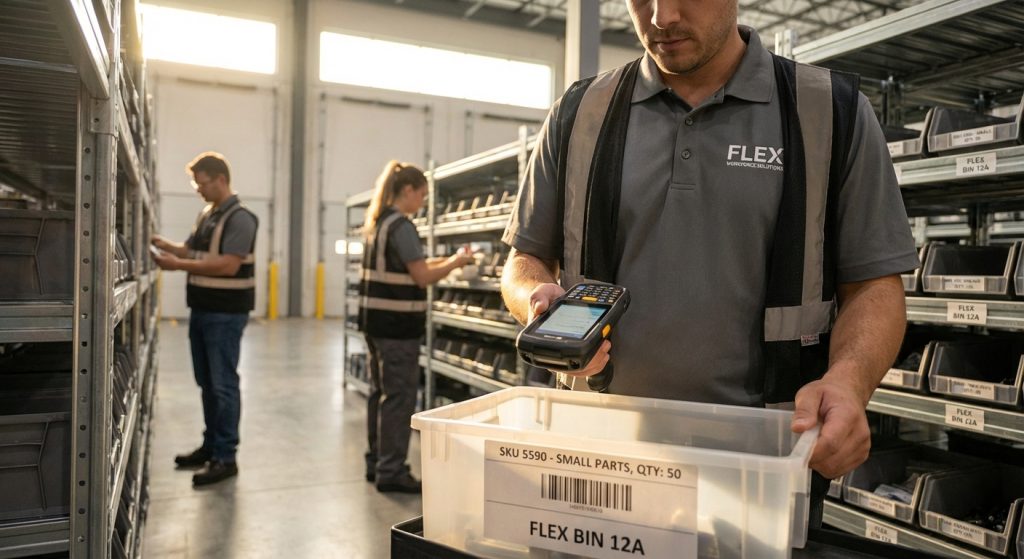
This agility is crucial for modern retail. It allows you to respond instantly to operational demands without the administrative burden or high costs associated with traditional hiring methods. Ultimately, you gain control over your budget and your operations.
Key Benefits of Using Flex Workers for Inventory
Adopting a flexible staffing model for inventory tasks provides several significant advantages. These benefits directly address the most common pain points faced by retail operations managers. They help you run a leaner, more efficient, and more resilient operation.
Achieve Unmatched Cost-Effectiveness
The most immediate benefit is financial. By using flex workers, you align your labor costs directly with your workload. This means you avoid paying full-time staff for downtime during slow periods. Moreover, you can prevent expensive overtime pay for your core team during sudden rushes.
This approach is a core principle of lowering payroll costs without sacrificing operational capacity. You pay a simple hourly rate for the specific task at hand. As a result, budgeting becomes more predictable and your overall labor spend decreases significantly.
Gain Agility and Scale on Demand
Retail never stands still. A surprise shipment might arrive, or a marketing promotion could suddenly triple foot traffic. Flexible workers give you the power to react immediately. You can book a team for the next day or even the same day to handle the unexpected.
This capability is a form of dynamic resource allocation, allowing you to scale your workforce up or down seamlessly. For example, you can schedule a large team for your annual physical inventory count and then return to your core staff the following week. This agility is impossible to achieve with fixed, full-time hiring.
Improve Inventory Accuracy and Reduce Errors
When your full-time employees are rushed and trying to juggle inventory counts with customer service, mistakes happen. These errors lead to stock discrepancies, phantom inventory, and ultimately, lost sales. It’s a frustrating and costly problem.
However, by bringing in a dedicated team of flex workers for tasks like cycle counting, you ensure the job gets their full attention. This focused approach dramatically improves accuracy. Because they have one clear objective, the data they collect is more reliable, leading to a healthier, more accurate inventory system.
Protect Your Core Team from Burnout
Your permanent staff are your most valuable asset. Overworking them during peak seasons leads to low morale, high turnover, and burnout. When they are exhausted, their performance in high-value areas like sales and customer engagement suffers.
Using flex workers for demanding, repetitive tasks protects your team. It allows them to focus on what they do best: serving customers and driving sales. This not only improves job satisfaction but also enhances the overall in-store experience for your shoppers.
Practical Applications: Where to Deploy Flex Workers
The use cases for flexible inventory support are extensive. They cover nearly every aspect of back-of-house and on-the-floor stock management. Here are some of the most effective ways to leverage an on-demand workforce:
- Cycle Counting & Physical Audits: Deploy a dedicated team to perform accurate and uninterrupted counts, ensuring your system data matches physical stock.
- Shipment Processing: Quickly unload trucks, sort merchandise, and move products from the receiving dock to the stockroom without delaying your core team’s duties.
- Shelf Stocking & Merchandising: Use overnight or off-peak shifts to restock shelves, update displays, and execute new planograms without disrupting shoppers.
- Returns Management (Reverse Logistics): Process returned items efficiently, inspecting them and returning them to sellable stock to recover value quickly.
- Omnichannel Fulfillment: Support “buy online, pick up in-store” (BOPIS) and ship-from-store orders by having flex workers dedicated to picking and packing items.
- Sale & Event Preparation: Set up promotional displays, update pricing, and prepare the sales floor for major events without pulling your sales associates away from customers.
A Simple Guide to Integrating Flex Workers
Getting started with a flexible workforce is straightforward. Success depends on clear processes and good communication. Following a few best practices will ensure a smooth and effective integration.
Partnering with the Right Platform
First, choose a reputable flexible labor platform. Look for one that offers a large pool of vetted workers in your area. Important features include transparent pricing, insurance coverage, and an easy-to-use interface for booking and managing shifts. A good platform makes the entire process simple and secure.
Creating Clear and Concise Task Instructions
Do not assume workers will automatically know your store’s specific processes. Create simple, step-by-step Standard Operating Procedures (SOPs) for each task. For example, use checklists and photos to explain how to count a specific section or stock a particular display. Clarity is the key to quality.
Providing On-Site Support and Tools
Finally, ensure flex workers have what they need to succeed. Designate a single point of contact, like an assistant manager, to answer questions and provide guidance. In addition, make sure all necessary tools, such as scanners, box cutters, or carts, are readily available for them upon arrival. A little preparation goes a long way.
Frequently Asked Questions
Are flex workers trained for inventory tasks?
Flex workers are typically trained on the specific tasks you define in your job request. They are adaptable and learn quickly, but success depends on your instructions. Providing clear, simple SOPs ensures they perform the job to your standards.
How is quality control managed with a flexible team?
Quality control is managed through several layers. Firstly, clear instructions prevent most errors. Secondly, having an on-site point of contact allows for spot-checks and immediate feedback. Finally, most platforms have a rating system, so you can provide feedback and build a preferred pool of high-performing workers for future jobs.
Is this solution expensive compared to temp agencies?
In most cases, flexible labor platforms are more cost-effective. They typically have lower overhead than traditional agencies, and their technology streamlines the process. Because you only pay for the exact hours worked, you eliminate waste and achieve a lower overall cost for the same or better results.
A Strategic Advantage for Modern Retail
In conclusion, leveraging flexible workers for inventory management is no longer just an option; it’s a strategic necessity. This model provides the cost control, agility, and operational support needed to thrive in the volatile retail landscape. By embracing an on-demand workforce, you can ensure your inventory is accurate, your stores are ready, and your team is focused on growth.
