
Lean Inventory: Cut Costs in Your VN Garment Factory
Published on Tháng 2 1, 2026 by Admin
What is Lean Inventory Management?
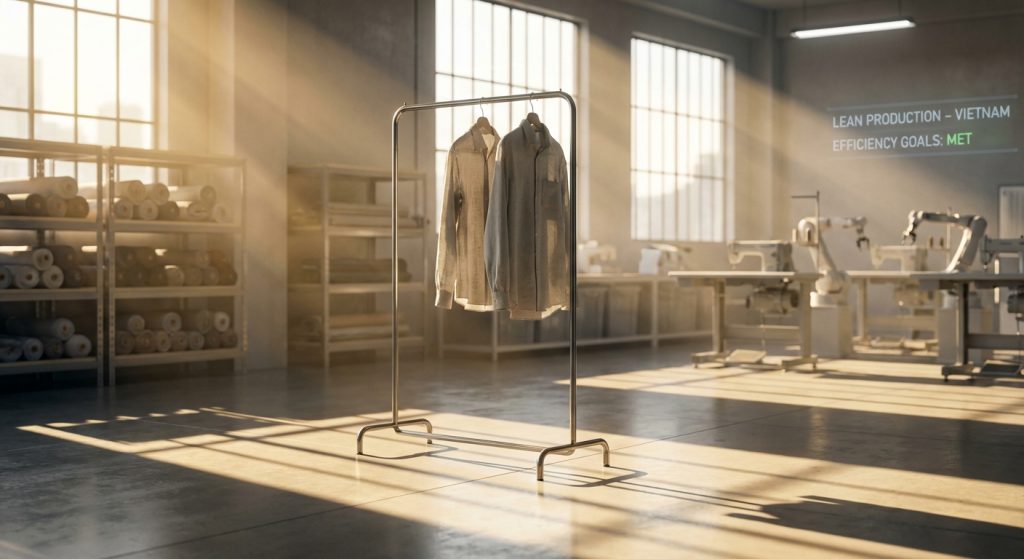
Lean inventory management is a simple but powerful idea. Its main goal is to eliminate waste in your production process. Specifically, waste is anything that does not add value for the customer. In inventory, this means holding only what you need, exactly when you need it.Think of it as a diet for your factory’s stockroom. Instead of being filled with excess materials, it holds just enough to meet current production demands. Consequently, this approach frees up valuable space and capital. It requires a shift in mindset from “just in case” to “just in time.”
Why Lean Matters for Vietnam’s Garment Sector
The global apparel market is incredibly fast-paced. Trends change in an instant. As a result, garment factories in Vietnam face immense pressure to be quick and flexible. Holding large amounts of a single fabric or color is a huge financial risk.However, lean practices help mitigate this risk. By keeping inventory levels low, factories can pivot quickly to new orders. They are not stuck with outdated materials they can no longer use. Moreover, this agility is a major competitive advantage. It allows you to serve fast-fashion clients more effectively and secure more profitable contracts. Improved cash flow is another significant benefit.
Core Lean Inventory Practices to Implement
Adopting a lean mindset involves several key practices. Each one plays a role in cutting waste and boosting efficiency. Furthermore, they work together to create a streamlined, responsive production system.
Just-In-Time (JIT) Production
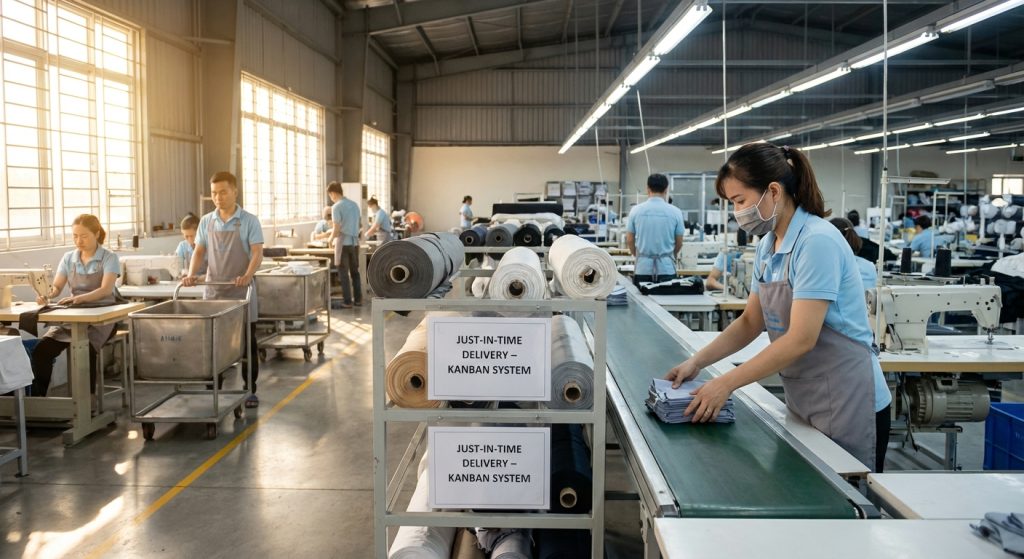
Just-In-Time, or JIT, is a cornerstone of lean inventory. The concept is straightforward: materials and components arrive from suppliers exactly when they are needed for production. Therefore, you eliminate the need for large, costly warehouses to store raw materials.This practice drastically reduces holding costs. For example, you spend less on rent, insurance, and security for storage space. It also minimizes the risk of materials becoming damaged, obsolete, or lost. However, JIT requires very strong, reliable relationships with your suppliers. Communication must be flawless to ensure materials arrive on schedule.
Kanban Systems for Visual Management
Kanban is a simple yet brilliant tool for managing workflow. It uses visual cues, often colored cards, to signal when more materials are needed. For example, when a worker uses the last box of buttons, they take the Kanban card from the empty box and place it on a central board.This action immediately signals that it’s time to order more buttons. Consequently, the system prevents both stockouts and overstocking. Kanban makes the inventory process visible to everyone on the factory floor. It is an inexpensive and highly effective way to implement a pull-based system, where work is only done when there is a demand for it.
Kaizen: The Power of Continuous Improvement
Kaizen is the Japanese philosophy of continuous improvement. It is based on the belief that small, ongoing changes can lead to significant improvements over time. In a factory setting, this means empowering every employee to identify and suggest ways to reduce waste.For instance, a sewing machine operator might suggest a better way to organize their workstation to reduce wasted motion. A warehouse worker might find a faster route for moving fabric rolls. These small ideas add up. Kaizen creates a culture where everyone is responsible for making the factory better, which is crucial for long-term lean success.
The 5S Methodology for an Organized Workplace
A clean and organized workplace is a safe and efficient one. The 5S methodology is a system for achieving this. It consists of five steps:
- Sort (Seiri): Remove all unnecessary items from the workspace.
- Set in Order (Seiton): Arrange necessary items so they are easy to find and use.
- Shine (Seiso): Keep the workspace clean and tidy.
- Standardize (Seiketsu): Create a consistent approach for housekeeping and organization.
- Sustain (Shitsuke): Maintain the new standards through discipline and commitment.
By implementing 5S, you reduce the time wasted looking for tools or materials. It also helps in reducing material waste in Vietnamese production plants by making it easier to see what you have.
The Benefits of Adopting Lean Practices
The advantages of implementing lean inventory extend beyond a tidier stockroom. These practices fundamentally change your business for the better. As a result, you gain a significant edge in a tough market.
Reduced Holding Costs
This is the most direct benefit. When you hold less inventory, you spend less money storing it. Your expenses for warehouse space, electricity, insurance, and security all go down. Furthermore, less capital is tied up in stock that is just sitting there, not generating revenue.
Improved Cash Flow
With less money invested in raw materials and finished goods, your cash flow improves dramatically. This available cash can then be used for more productive purposes. For example, you could invest in new machinery, train your staff, or expand your business. Healthy cash flow is the lifeblood of any successful manufacturing operation.
Increased Flexibility and Responsiveness
Lean factories are agile factories. Because you carry less stock, you can respond to changes in customer demand much faster. If a client suddenly wants a different color or style, you can switch production without worrying about a warehouse full of unusable items. This flexibility is key for smart inventory management for Vietnamese fashion retailers and the manufacturers who supply them.
Enhanced Quality Control
Lean production often involves working in smaller batches. A major advantage of this is that quality issues are spotted much earlier in the process. Instead of producing thousands of faulty garments, you might only produce a few before the problem is identified and fixed. This leads to less rework, fewer defects, and happier customers.
Getting Started: A Simple Roadmap
Transforming your factory to a lean model can seem daunting. However, you don’t have to do it all at once. A gradual approach is often the most successful.First, start small with a pilot project. Choose one production line or a specific area of your warehouse. Second, train your team on the basic principles of lean, like 5S or Kanban. Third, measure your starting point and track your progress with clear Key Performance Indicators (KPIs). Finally, celebrate your small wins to build momentum and get everyone excited about the change.
Frequently Asked Questions (FAQ)
Is lean inventory expensive to implement?
Not necessarily. Many lean practices, like 5S and Kanban, require minimal financial investment. The biggest cost is often the time and effort spent on training and changing company culture. However, the long-term savings almost always outweigh the initial costs.
What is the biggest challenge of going lean?
The biggest challenge is usually cultural resistance. People are often comfortable with the old way of doing things. Therefore, strong leadership and clear communication are essential to convince everyone of the benefits and get them on board with the new processes.
How long does it take to see results?
You can see some results very quickly. For example, a 5S project can improve organization and morale in just a few weeks. However, more significant benefits, like major cash flow improvements, may take several months to a year to become fully apparent as the entire system becomes more efficient.
Can small factories use lean practices?
Absolutely. Lean principles are scalable and can be adapted to any size of operation. In fact, smaller factories can often be more agile and implement changes faster than larger corporations. The core ideas of eliminating waste and improving flow are universal.
Conclusion: The Future is Lean
In conclusion, the Vietnamese garment industry cannot afford to be wasteful. Global competition demands efficiency, speed, and flexibility. Adopting lean inventory practices is no longer just an option; it is a necessity for survival and growth.By implementing Just-In-Time, Kanban, and Kaizen, you can dramatically cut costs and improve your operations. As a result, your factory will be stronger, more resilient, and better prepared for the future. Start your lean journey today and build a more profitable business for tomorrow.
