
Grow More with Less: Water Tech for Vietnam’s Farms
Published on Tháng 2 1, 2026 by Admin
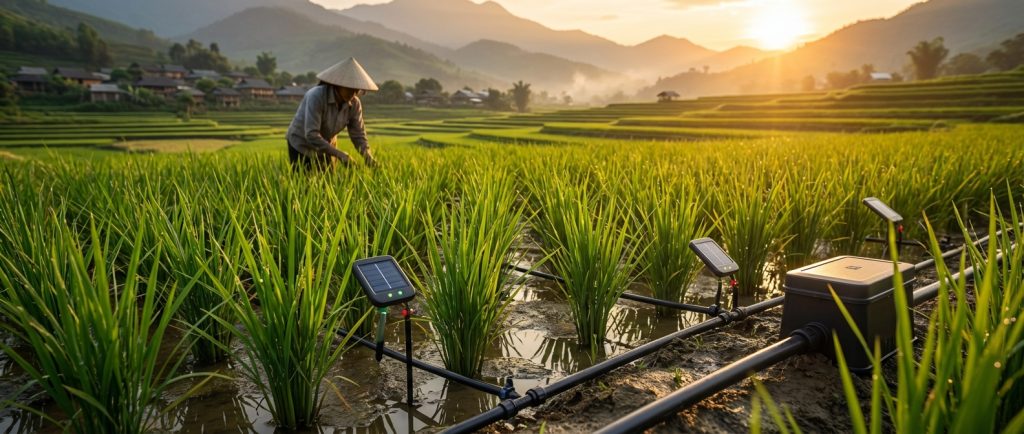
Vietnam’s agriculture sector is the backbone of its economy. However, it faces a growing threat from water scarcity. This article provides a comprehensive guide for Vietnamese agribusinesses on adopting efficient water management technologies. We will explore smart irrigation, IoT sensors, and automation. Ultimately, these tools help increase yields, cut costs, and build a more sustainable farming future.
The Challenge: Vietnam’s Water Crisis in Agriculture
Vietnam is a major agricultural powerhouse. It produces rice, coffee, and many other crops for the world. However, this success depends heavily on a reliable water supply. Unfortunately, that supply is now under serious pressure.
Climate change is causing more extreme weather events. For instance, droughts are becoming longer and more severe. On the other hand, intense flooding can damage crops and soil. These changes make traditional farming methods risky and unpredictable.
The Mekong Delta Dilemma
The Mekong Delta is Vietnam’s most important agricultural region. It is often called the “rice bowl” of the country. Yet, this vital area is facing a critical situation. Firstly, rising sea levels are causing saltwater to intrude further inland. This saline water contaminates freshwater sources and makes land unusable for many crops.
In addition, upstream dams on the Mekong River reduce the flow of freshwater and vital sediments. As a result, the delta is sinking and becoming less fertile. These combined factors create a perfect storm for farmers in the region.
Inefficient Traditional Methods
Beyond environmental issues, old irrigation techniques also waste enormous amounts of water. For example, flood irrigation is still common for many crops. This method involves covering entire fields with water. A large portion of this water evaporates or runs off before plants can absorb it. Therefore, a shift to more efficient practices is not just beneficial; it is essential for survival.
The Solution: Smart Water Management Technologies
The good news is that modern technology offers powerful solutions. Agribusinesses can use these tools to fight water scarcity. Moreover, they can improve their overall efficiency and profitability. These technologies allow farmers to apply the right amount of water, at the right time, and in the right place.
Drip and Micro-Irrigation Systems
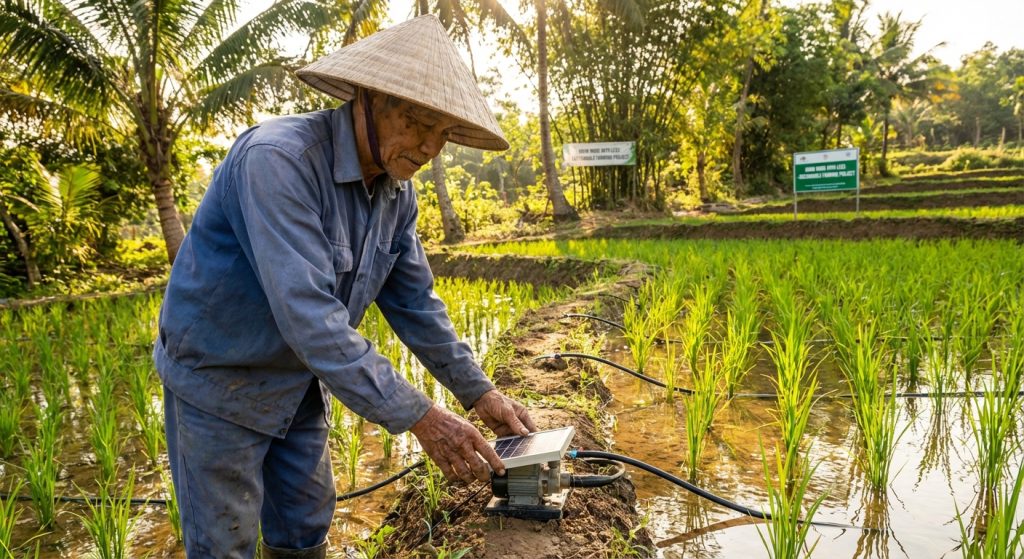
One of the most effective technologies is drip irrigation. This method uses a network of pipes and tubes to deliver water directly to the base of each plant. It releases water slowly, drop by drop. Consequently, very little water is lost to evaporation or runoff.
Micro-sprinklers are a similar option. They spray a fine mist over a small area near the plants. Both systems can reduce water usage by up to 70% compared to traditional methods. Furthermore, they help prevent the growth of weeds between crop rows.
IoT Sensors and Data Analytics
To truly optimize water use, you need data. Internet of Things (IoT) sensors are the key to gathering this information. These small devices can be placed in the soil, on plants, or in weather stations around the farm. They collect real-time data on many factors.
- Soil Moisture: Sensors tell you exactly how much water is in the soil at different depths.
- Temperature and Humidity: This data helps predict how quickly water will evaporate.
- Plant Health: Some sensors can even detect signs of stress in plants before they are visible to the human eye.
This information is then sent to a central computer or a smartphone app. As a result, farmers can make informed decisions instead of guessing when to irrigate. This data-driven approach is a core part of using digital tools for managing small organic farm expenses, as it cuts waste dramatically.
Automation and Control Systems
The final piece of the puzzle is automation. Once you have the data, automated systems can act on it. For example, you can program your irrigation system to turn on automatically when soil moisture drops below a certain level. This removes the need for manual labor and ensures perfect timing.
These systems can also be controlled remotely. A farm manager can adjust irrigation schedules from a smartphone or computer, even if they are hundreds of kilometers away. Therefore, automation saves time, reduces labor costs, and guarantees that crops always get the water they need.
Benefits of Efficient Water Management
Adopting these modern technologies brings a wide range of advantages. The benefits go far beyond just saving water. They create a more productive, profitable, and resilient agribusiness.
Increased Crop Yields and Quality
When plants receive the optimal amount of water, they grow healthier and stronger. Overwatering can lead to root rot and disease, while underwatering causes stress and stunts growth. Smart irrigation eliminates this guesswork. As a result, businesses often see a significant increase in both the quantity and quality of their harvest.
Significant Cost Savings
Water is not free. Reducing water consumption directly lowers utility bills. In addition, automated systems reduce the need for manual labor, cutting payroll expenses. Pumping water also requires energy, so using less water means lower electricity or fuel costs.
Moreover, many smart farming systems can be powered by solar panels. This can further reduce energy expenses and make the farm eligible for renewable energy grants for small rural business owners, creating another financial benefit.
Enhanced Sustainability and Resilience
Efficient water management is crucial for environmental sustainability. By using less water, agribusinesses help preserve this precious resource for everyone. It also reduces agricultural runoff, which can pollute rivers and streams with fertilizers and pesticides.
Furthermore, these systems make farms more resilient to climate change. During a drought, a farm with drip irrigation and soil sensors can survive with far less water than a traditional farm. This resilience is key to long-term success in a changing world.
Implementing Smart Water Systems in Your Agribusiness
Transitioning to smart water management may seem daunting, but it can be done in manageable steps. A phased approach allows you to learn and adapt without a massive upfront investment.
Step 1: Assess Your Current Water Usage
First, you need to understand your current situation. Start by measuring how much water you are using. You can install water meters at key points in your irrigation system. Also, walk your fields and identify areas of waste, such as leaks or significant runoff. This initial assessment will create a baseline for measuring future improvements.
Step 2: Start Small with a Pilot Project
You do not need to overhaul your entire farm at once. Instead, choose a small section of land for a pilot project. For example, install a drip irrigation system and soil sensors on one hectare. This allows you to test the technology, learn how to use it effectively, and see the results firsthand. A successful pilot project will build confidence and provide valuable data for a larger rollout.
Step 3: Seek Expertise and Financial Support
Finally, do not be afraid to ask for help. There are many agitech companies and consultants in Vietnam who specialize in water management. They can help you design a system that fits your specific needs and budget. In addition, the government often provides loans or grants for businesses adopting sustainable technologies. Research these programs to help finance your investment.
Frequently Asked Questions (FAQ)
Is smart irrigation technology expensive to install?
The initial cost can vary widely. However, it’s important to view it as a long-term investment. The savings on water, energy, and labor often provide a rapid return on investment. Starting with a small pilot project can make the initial cost more manageable.
Do I need to be a technology expert to use these systems?
No. Most modern agitech systems are designed to be user-friendly. They often come with simple smartphone apps and clear dashboards. In addition, the companies that sell these systems usually provide training and ongoing support.
Can these technologies be used for any type of crop?
Yes, smart irrigation is highly adaptable. Drip systems are excellent for row crops, trees, and vineyards. Micro-sprinklers can be used for vegetable beds and orchards. The key is to work with an expert to design a system that is tailored to your specific crops and field conditions.
What is the single most important first step?
The most crucial first step is to measure your current water usage. You cannot manage what you do not measure. Installing simple water meters will give you the data you need to understand your consumption and identify opportunities for savings.
In conclusion, efficient water management is no longer an option for Vietnamese agribusiness—it is a necessity. By embracing technologies like drip irrigation, IoT sensors, and automation, farms can overcome the challenges of water scarcity. They can also boost their productivity and secure a profitable, sustainable future in a changing climate.
