
Smart Inventory for Vietnam Fashion: Sell More, Waste Less
Published on Tháng 1 31, 2026 by Admin
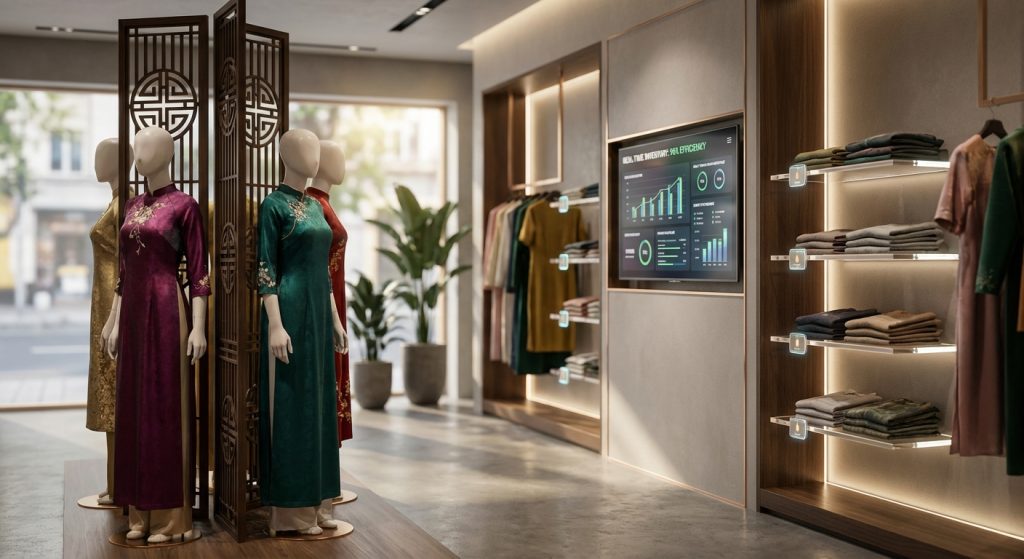
As a fashion retail owner in Vietnam, you know the market moves incredibly fast. New trends appear overnight on social media. Customer demands change with the seasons. Therefore, managing your inventory effectively is not just about storage; it’s about survival and growth. This guide explores smart inventory management to help you reduce waste, increase sales, and build a more profitable business.
The Problem: Why Old Inventory Methods Fail in Vietnam
Many fashion retailers still rely on manual tracking or basic spreadsheets. However, these methods can’t keep up with the dynamic Vietnamese market. They often lead to significant financial losses and missed opportunities. As a result, your business may struggle to compete.
The High Cost of Dead Stock
Dead stock refers to items that never sell. This is a massive problem for fashion retailers. Firstly, it ties up your capital in products that generate no revenue. Secondly, it occupies valuable shelf and warehouse space. Studies show that poor inventory management can cost retailers up to 30% of their profit due to dead stock and markdowns. Consequently, you are forced to offer deep discounts, which erodes your profit margins.
Imagine a rack of last season’s jackets. They take up space that could hold a new, trending collection. This is a direct loss for your store.
Missing Out on Fast-Moving Trends
On the other hand, not having enough of a popular item is just as damaging. Vietnam’s fashion scene is heavily influenced by social media trends from Korea, China, and the West. When a style suddenly becomes popular, customers want it immediately. If you don’t have it in stock, they will go to your competitor without a second thought. This leads to lost sales and damages your brand’s reputation as a trendsetter.
What is Smart Inventory Management?
Smart inventory management uses data and technology to optimize your stock levels. It helps you understand what to order, when to order, and how much to order. In short, it moves you from guessing to knowing. This is a key part of a broader SME digital transformation that boosts efficiency.
Moving Beyond Spreadsheets
Relying on a spreadsheet is better than nothing, but it has limits. For example, it doesn’t update in real-time. It can’t automatically track sales across multiple channels like your physical store and your Facebook page. Smart systems, in contrast, integrate all your sales points. They provide a single, accurate view of your entire inventory at any moment.
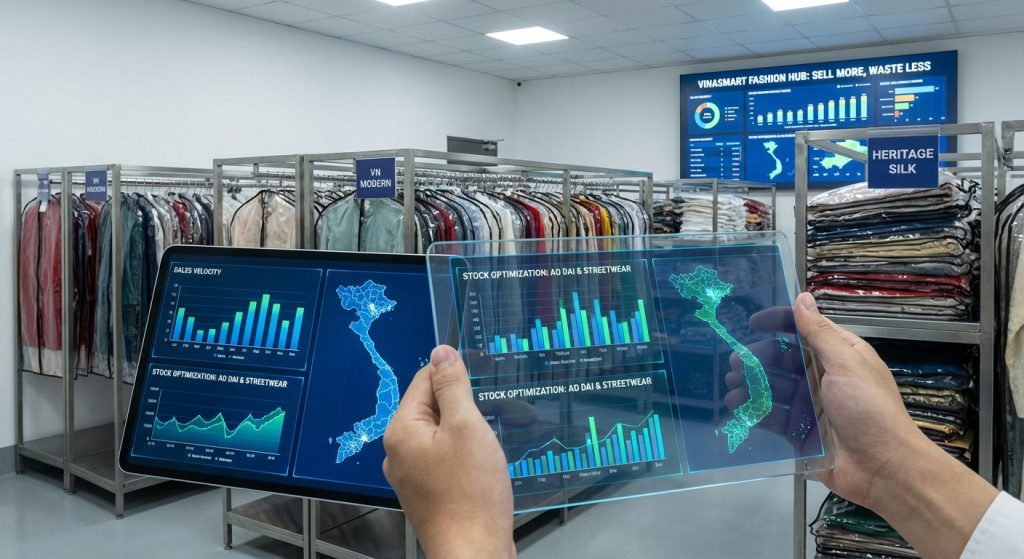
The Core Benefits for Your Business
Adopting a smart approach offers several powerful advantages. These benefits directly impact your bottom line and long-term success.
- Reduced Costs: You will spend less money on holding unsold items and minimize the need for costly markdowns.
- Increased Sales: By having popular items in stock, you can meet customer demand and avoid stockouts.
- Improved Cash Flow: Your money isn’t tied up in dead stock. Instead, it can be used to invest in new, profitable products.
- Better Customer Satisfaction: Customers find what they want, leading to greater loyalty and positive reviews.
Key Strategies for Smart Inventory Control
Getting started with smart inventory management doesn’t have to be complicated. You can begin by implementing a few core strategies. These methods will provide immediate insights and help you make better business decisions.
Strategy 1: Embrace Data-Driven Forecasting
Stop guessing what will sell. Instead, use your past sales data to predict future demand. A good Point of Sale (POS) system can show you which items, sizes, and colors sold best during specific periods. For instance, you can analyze sales from last year’s Tet holiday to plan for this year’s collection. The Vietnamese fashion market is dynamic, with projections showing significant growth, making accurate forecasting crucial to capture your share.
Strategy 2: Use ABC Analysis to Prioritize Stock
ABC analysis is a simple way to categorize your inventory. It helps you focus your attention where it matters most.
- Category A: Your best-sellers. These are about 20% of your items but generate 80% of your revenue. You must always have these in stock.
- Category B: Your mid-range items. They sell consistently but are not superstars. Monitor them regularly.
- Category C: Your slow-moving items. These make up the bulk of your inventory but contribute little to sales. Consider discontinuing them or ordering them in very small quantities.
This method ensures you never run out of your most profitable products.
Strategy 3: Integrate Your Online and Offline Channels
Many Vietnamese fashion businesses sell through multiple channels: a physical store, a website, Facebook, Instagram, and e-commerce platforms like Shopee or Lazada. Without integration, managing stock is a nightmare. An omnichannel system syncs your inventory across all channels in real-time. Therefore, when an item sells online, the stock level is automatically updated for your physical store, preventing you from selling the same item twice.
Strategy 4: Adopt a Just-in-Time (JIT) Approach
Just-in-Time (JIT) is a core principle of a lean operations strategy. The goal is to receive new stock just as you are about to need it, rather than holding large quantities for long periods. This requires strong relationships with local suppliers who can deliver quickly. For a Vietnamese fashion retailer, this could mean ordering smaller batches of a new trend. If it sells well, you can quickly reorder. If not, you haven’t invested a large amount of capital.
Choosing the Right Technology for Your Store
Technology is the engine of smart inventory management. The right tools automate tedious tasks and provide critical data for decision-making. You have several options depending on your budget and business size.
Point of Sale (POS) Systems with Inventory Features
A modern POS system is the first step. It’s more than just a cash register. It tracks every sale and updates your inventory counts automatically. Look for a POS that offers basic inventory reports. This will show you your top-selling products and help you start with data-driven forecasting. Many POS systems today are cloud-based and affordable for small businesses.
Dedicated Inventory Management Software
As your business grows, you may need more powerful tools. Dedicated inventory management software offers advanced features. For example, it can set automatic reorder points, manage supplier information, and provide detailed analytics. These systems can integrate with your POS, accounting software, and online stores. This creates a fully connected system for managing your entire retail operation.
Conclusion: Start Small, Scale Smart
Transforming your inventory management won’t happen overnight. However, the journey is essential for long-term success in Vietnam’s competitive fashion market. Start by analyzing your current process and identifying the biggest pain points. Is it dead stock? Or is it frequent stockouts of popular items?
Then, take one step at a time. Begin by using your sales data to make better ordering decisions. Implement the ABC analysis to prioritize your products. As you grow, invest in technology that automates tasks and provides deeper insights. By adopting these smart strategies, you can build a more resilient, profitable, and customer-focused fashion business.
Frequently Asked Questions
How much does inventory management software cost?
The cost varies widely. Basic plans can start from as low as $30 USD per month for small businesses. More advanced systems for multi-store or omnichannel retailers can cost several hundred dollars per month. Many providers offer free trials, so you can test the software before committing.
I have a very small shop. Do I really need this?
Yes, absolutely. Even for a small shop, smart inventory principles are crucial. You can start simply with a modern POS system and the ABC analysis method. This will prevent your limited capital from being tied up in clothes that don’t sell, which is even more critical for a small business.
How can I find reliable suppliers for a JIT strategy?
Look for local manufacturers and wholesalers in cities like Ho Chi Minh City or Hanoi. Attend local trade shows and network with other retailers. Start with small test orders to gauge their speed and reliability before making larger commitments. Building strong relationships is key.
What is the single most important metric to track?
While many metrics are useful, “inventory turnover ratio” is one of the most important. It measures how many times you sell and replace your inventory over a specific period. A higher ratio generally means you are selling products quickly and managing your stock efficiently.
