
Your Watch as an Asset: Mastering Market Liquidity
Published on Tháng 1 27, 2026 by Admin
For many collectors, a high-ticket timepiece is a passion. However, it is also a significant financial asset. Understanding its liquidity is crucial for any serious collector. In short, liquidity refers to how easily you can convert your watch into cash without a major loss in value. A liquid watch provides flexibility and financial security.
This article explores the concept of secondary market liquidity for luxury watches. We will cover the factors that drive it and offer strategies to assess and maximize the value of your collection. As a result, you can make more informed decisions as both a collector and an investor.
What is Secondary Market Liquidity?
In simple terms, secondary market liquidity is the ability to sell a pre-owned item quickly at a fair market price. For luxury watches, this market is a vibrant and global ecosystem. It consists of dealers, auction houses, online platforms, and private collectors.
A highly liquid watch can be sold in days or weeks. In contrast, a less liquid timepiece might sit on the market for months or even years. This often forces the seller to accept a much lower price. Therefore, liquidity is a direct indicator of a watch’s desirability and retained value.
Why Liquidity Matters for Collectors
Liquidity is about more than just a quick sale. Firstly, it represents a strong store of value. A liquid watch holds its worth well over time, protecting your capital from inflation. Secondly, it provides incredible financial flexibility. Life is unpredictable, and the ability to access funds quickly can be invaluable.
Moreover, understanding liquidity helps you build a smarter collection. It allows you to identify which pieces are not just beautiful but also sound financial assets. This knowledge can transform your hobby into a self-funding passion, where you can trade up or diversify your collection strategically. In essence, it turns your passion into a more dynamic asset class, and some collectors even explore options like refinancing luxury assets for better liquidity access when managing a large portfolio.
Factors Driving Watch Liquidity
Several key elements determine how liquid a timepiece is. These factors work together to create demand and establish a stable market value. The entire pre-owned watch market has grown significantly, with some analysts projecting it will surpass $35 billion by 2025. This growth highlights the importance of understanding what makes a watch desirable.
The Power of Brand and Model
Brand recognition is the single most important factor. Brands like Rolex, Patek Philippe, and Audemars Piguet are household names with a long history of quality and prestige. Consequently, their watches are consistently in high demand.
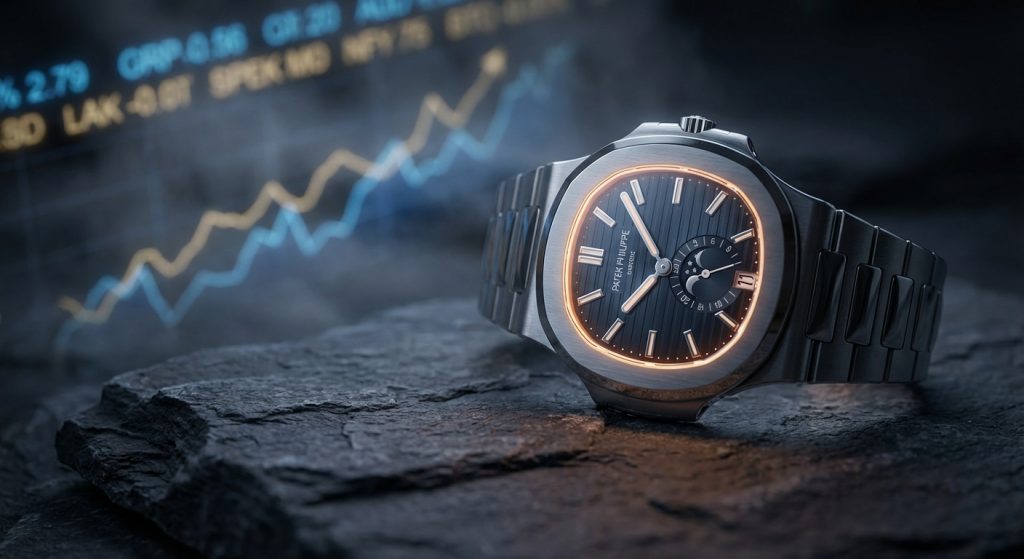
Within these brands, specific models carry even more weight. For example, a Rolex Daytona or a Patek Philippe Nautilus has a level of liquidity that few other watches can match. These are often called “blue-chip” models because they are considered safe bets for retaining value.
Rarity and Production Numbers
Simple supply and demand economics play a huge role. Watches produced in limited numbers are naturally more sought after. This includes limited editions, discontinued models, and timepieces with unique features or “errors” from the factory.
However, rarity alone is not enough. A watch must also be desirable. An unpopular model that was produced in small quantities will not be liquid. The sweet spot is a popular model with a controlled or limited supply, which creates a competitive market among buyers.
Condition, Box, and Papers
The physical condition of the watch is paramount. Scratches, dings, and especially over-polishing can significantly reduce a watch’s value. Collectors prefer watches in original, unaltered condition. Even the patina on a vintage piece can be a desirable feature.
Furthermore, the presence of the original box and papers is critical. This “full set” authenticates the watch and confirms its provenance. A watch with its complete set can command a premium of 15% to 25% higher than the watch alone. It provides peace of mind for the buyer and, as a result, makes the watch much easier to sell.
Market Trends and Hype
The watch market is not immune to trends. Social media, celebrity endorsements, and online forums can create sudden spikes in demand for specific models. For instance, a watch appearing in a popular movie can become an overnight sensation.
While these trends can create opportunities, they can also be volatile. A watch that is hot today might cool off tomorrow. Experienced collectors pay attention to these trends but base their long-term strategy on more fundamental factors like brand and rarity.
How to Assess the Liquidity of Your Timepiece
Assessing your watch’s liquidity requires research and a bit of effort. Fortunately, there are many resources available to help you get an accurate picture of the market. This process will empower you to make informed decisions about your collection.
Researching Recent Sales Data
The internet is your most powerful tool. You can look at recent sales from major auction houses like Christie’s, Sotheby’s, and Phillips. In addition, online marketplaces such as Chrono24 and WatchBox show current listings and sales histories.
When researching, pay close attention to the details. Compare models that are in a similar condition and have the same accessories as yours. This will give you a realistic baseline for your watch’s current market value and how quickly it might sell.
Consulting with Trusted Dealers
Building relationships with reputable watch dealers is invaluable. These experts have their finger on the pulse of the market. They can provide an accurate appraisal and offer insight into the current demand for your specific watch.
A trusted dealer can also be your best avenue for selling a watch. They have a network of clients and can often facilitate a faster, safer transaction than a private sale. Their expertise helps you avoid the pitfalls of an otherwise complex market.
Maximizing the Liquidity of Your Collection
You can take proactive steps to protect and even enhance the liquidity of your watches. This involves careful maintenance, proper storage, and strategic thinking. These practices ensure your assets remain in optimal condition for a potential future sale.
Proper Maintenance and Service
Regular servicing is essential for a mechanical watch. However, it’s important to choose the right service provider. For modern watches, a service by the original manufacturer is often preferred. For vintage pieces, a specialist who understands how to preserve original parts and finishes is crucial.
Always keep service records. This documentation adds to the watch’s provenance and proves that it has been well-cared for. Additionally, store your watches in a safe, dry place to prevent damage from moisture or accidents.
Strategic Buying and Selling
Patience is a virtue in watch collecting. Avoid impulse buys and focus on acquiring pieces with strong fundamentals. Research a watch thoroughly before you purchase it. Understand its market history and liquidity profile.
Similarly, know when to sell. If a watch in your collection has experienced a rapid price increase due to a trend, it might be a good time to realize that profit. You can then reinvest that capital into a more stable, long-term piece. This active management turns a static collection into a dynamic portfolio.
Frequently Asked Questions
Which watch brands are the most liquid?
Generally, Rolex, Patek Philippe, and Audemars Piguet are considered the “big three” for liquidity. Their brand strength, controlled production, and timeless designs create constant demand. Other brands like F.P. Journe, Richard Mille, and certain models from Omega and Cartier also have very strong secondary markets.
Does a service from the manufacturer increase liquidity?
It depends. For a modern watch, a recent manufacturer service can be a strong selling point, as it comes with a warranty and guarantees authenticity. For a vintage watch, however, a manufacturer service can sometimes hurt value if they replace original parts like the dial, hands, or bezel. Collectors of vintage pieces highly value originality.
How quickly can I sell a high-ticket watch?
This depends entirely on the watch’s liquidity. A highly desirable model like a steel Rolex sports watch could sell within hours or days if priced correctly. On the other hand, a more niche or less popular high-end watch from an independent brand might take several months to find the right buyer.
Is holding the original box and papers really that important?
Yes, it is extremely important for maximizing liquidity and value. The box and papers, often called a “full set,” confirm the watch’s authenticity and provenance. For many collectors, a watch without them is incomplete. Selling a watch as a full set makes the transaction easier, builds trust, and can increase the final sale price significantly.
“`
