
Reduce Yacht Crewing Costs: A Strategic Owner’s Guide
Published on Tháng 1 27, 2026 by Admin
The True Cost of Crew: Beyond Just Salaries
Understanding the full scope of crew expenses is the first step. Salaries are just the beginning. In fact, total crew costs include many other significant financial commitments.These additional expenses often include:
- Recruitment Fees: Finding qualified crew is expensive and time-consuming.
- Training and Certifications: Crew must maintain specific qualifications.
- Health Insurance and Benefits: Competitive packages are essential for retention.
- Travel and Repatriation: Flying crew to and from the yacht adds up.
- Uniforms and Provisions: Daily living costs are part of the budget.
Consequently, these combined costs can be substantial. For many large yachts, crew salaries and related expenses can account for up to 60% of the annual operating budget. Therefore, a small percentage saved here has a major impact on your overall expenditure.
Strategic Hiring: Your First Line of Defense
The most effective way to control long-term crewing costs begins with your hiring process. A proactive and strategic approach to building your team pays dividends for years. It’s about finding the right people, not just filling positions.
Focus on Versatility and Cross-Training
A smaller, more versatile crew can often outperform a larger, more specialized one. Therefore, prioritize candidates with multiple skills. For instance, a deckhand with engineering skills or a stewardess with culinary training provides immense value.Investing in cross-training for your existing crew is also a powerful strategy. This builds a more resilient and efficient team. Moreover, it reduces the need to hire temporary specialists for specific tasks. This flexibility allows your yacht to operate smoothly with a leaner, more capable staff.
The Power of Crew Retention
High crew turnover is a significant and often hidden cost. The cycle of recruiting, hiring, and onboarding new members is expensive. Furthermore, constant change disrupts the team’s chemistry and service consistency. Studies show that high turnover can increase recruitment costs by 25-50% annually.To combat this, focus on creating an environment that encourages loyalty. This includes:
- Offering competitive salaries and benefits.
- Providing clear paths for career progression.
- Fostering a positive and respectful work culture.
- Investing in professional development and training.
Ultimately, a happy and motivated crew is more productive. They take better care of the yacht and provide a superior experience for you and your guests. This makes retention one of the most effective cost-saving tools available.
Innovative Crewing Models for Modern Ownership
The traditional model of a full-time, year-round crew is not always the most efficient solution. Depending on your yacht’s usage, flexible crewing models can offer significant savings. In addition, they can improve crew morale and performance.
Rotational Crewing: Freshness and Consistency
Rotational schedules (e.g., two months on, two months off) are becoming increasingly popular. This model helps prevent crew burnout, which is a major cause of turnover. As a result, you retain experienced professionals who are fresh and engaged while on duty.While it may seem more expensive to employ two individuals for one position, the benefits often outweigh the costs. Rotational crew are more loyal and perform at a higher level. This consistency reduces mistakes, enhances safety, and improves the overall guest experience.
Seasonal and Contract-Based Staffing
If you use your yacht primarily during specific seasons, a full-time crew might be unnecessary. Instead, consider a core permanent crew for essential roles like the Captain and Chief Engineer. You can then supplement this team with seasonal or contract-based staff during peak periods.This approach provides maximum flexibility. It ensures you have the right number of staff when you need them, without paying for a full crew during the off-season. For owners with predictable schedules, this strategy offers a direct path to lower operational costs and better seasonal staffing efficiency.
Leveraging Technology to Optimize Onboard Staffing
Modern technology offers powerful tools for increasing efficiency and reducing the reliance on manual labor. By embracing automation and remote management, you can operate your yacht with a more streamlined crew.
Automation and Smart Systems
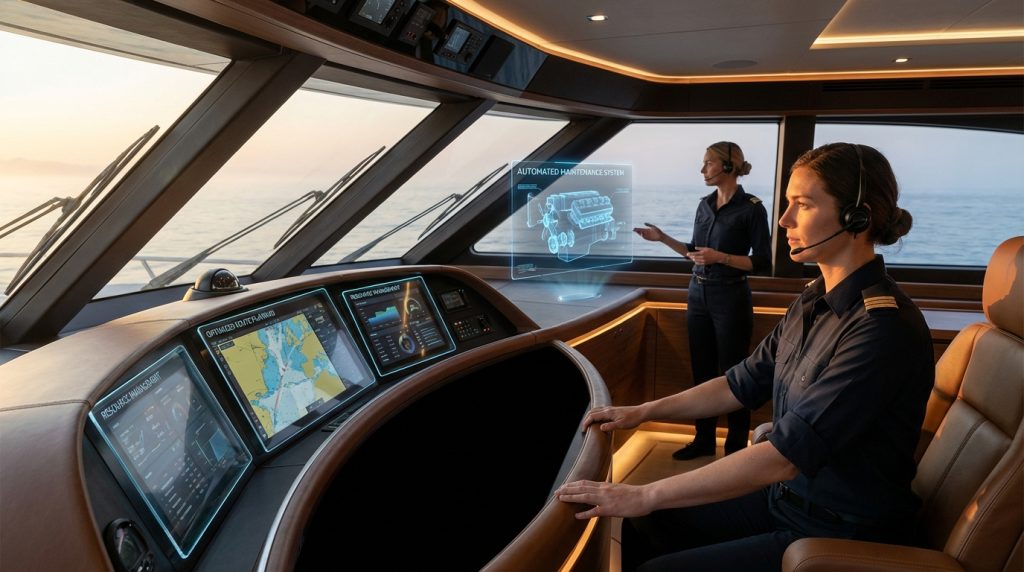
Today’s yachts can be equipped with advanced systems that automate routine tasks. For example, integrated bridge systems reduce the navigational workload. Likewise, automated engine room monitoring systems can alert shore-based teams to potential issues before they become critical.These technologies do not replace skilled crew. However, they act as a force multiplier. They allow fewer crew members to manage the yacht’s operations safely and effectively. This leads to direct savings in headcount and associated costs.
Shore-Based Support and Management
A dedicated shore-based management team can handle many administrative and logistical tasks. This frees up your senior crew to focus on running the yacht and serving guests. For instance, tasks like accounting, provisioning, and itinerary planning can be managed remotely.This division of labor improves efficiency across the board. The captain is not burdened with paperwork, and the shore team can leverage economies of scale. As a result, the entire operation becomes more professional and cost-effective.
The Charter Solution: Making Crew Costs Work for You
For many owners, offering the yacht for charter is the ultimate cost-reduction strategy. A successful charter program can offset a significant portion, if not all, of your annual operating expenses, including crew salaries.A professional, well-managed crew is essential for a successful charter operation. They are your primary asset in attracting and satisfying high-paying charter guests. In this context, crew costs are not just an expense; they are an investment in revenue generation. Exploring yacht charter income strategies to offset annual costs can transform your financial outlook. Therefore, a top-tier crew can pay for themselves many times over.
Frequently Asked Questions
How much can I realistically save on crew costs?
Savings can vary widely based on your yacht’s size and usage. However, by implementing a combination of these strategies, savings of 10-20% on your annual crewing budget are often achievable. This is a significant figure given the overall cost.
Will reducing crew size compromise safety?
No, if done strategically. The goal is not simply to cut numbers but to increase efficiency. By hiring versatile, cross-trained crew and leveraging technology, you can often enhance safety with a leaner team. Always ensure your vessel meets or exceeds its minimum safe manning requirements.
Is a rotational crew really more cost-effective?
It can be, especially on larger yachts with demanding schedules. While the direct salary cost is higher, the savings from reduced turnover, fewer recruitment fees, and higher operational performance often create a net financial gain. In addition, crew morale and retention improve dramatically.
How do I start implementing these changes?
Start with a comprehensive audit of your current crewing structure and costs. Work with an experienced yacht management company. They can analyze your specific needs and create a tailored plan that prioritizes efficiency without sacrificing luxury or safety.
Conclusion: A Smarter Approach to Yacht Staffing
Reducing crewing costs is not about cutting corners. Instead, it is about making smarter, more strategic decisions. By focusing on quality over quantity, you can build a loyal, efficient, and highly capable team.Embrace versatile hiring and invest in crew retention. Moreover, explore flexible crewing models that match your actual usage. Finally, leverage technology to automate tasks and improve efficiency. By adopting these modern approaches, you can significantly lower your operational budget and ensure the long-term enjoyment of your magnificent asset.
