
Next-Gen Tokenizers: Your Key to Hyper-Realistic CGI
Published on Tháng 1 24, 2026 by Admin
The Problem: Why Current Tokenizers Fail CGI
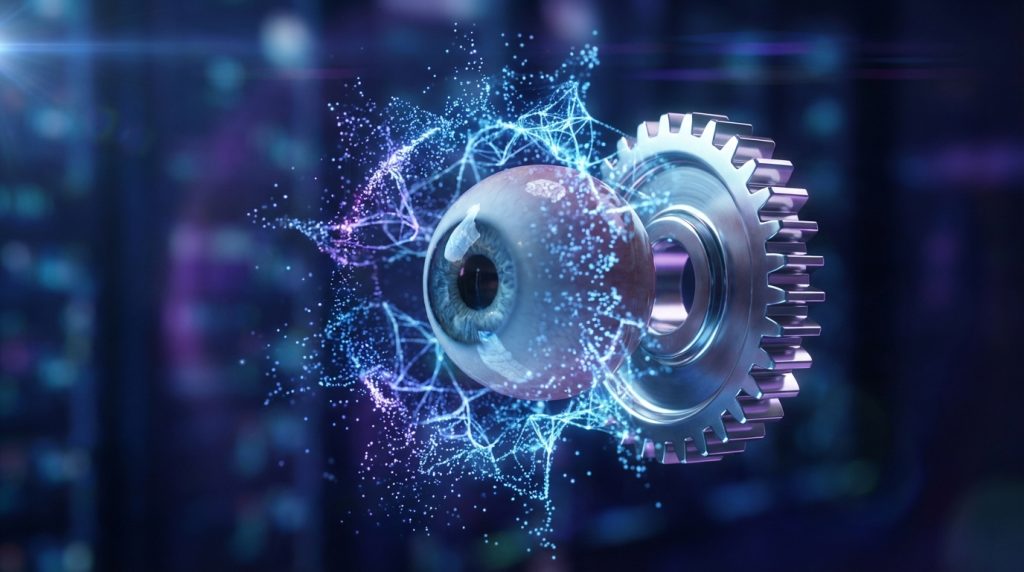
Today’s generative AI models are incredibly powerful. Yet, they often struggle with the specific demands of high-end visual effects. The root of this issue frequently lies in how we feed them data. Standard tokenization methods were not designed for the complexity of a VFX shot.These methods treat a frame as a simple grid of pixels. They slice it into generic squares without understanding the content within them. As a result, critical visual information is often lost or misinterpreted before the AI even begins its work. This leads to frustrating limitations for artists and supervisors.
The Detail Loss Dilemma
A major problem is the loss of fine detail. For instance, a traditional tokenizer might break a patch of skin into several blocks. Some blocks might contain a pore, while others contain smooth skin. The AI sees these as disconnected pieces. It struggles to maintain the continuous, subtle texture of the skin’s surface.Moreover, this leads to artifacts. You might see strange blockiness in reflections or a loss of sharpness in intricate patterns like fabric weaves or wood grain. The AI is trying to reconstruct a coherent image from a jumbled puzzle, and the pieces just don’t fit perfectly.
Inefficiency and High Computational Costs
Current tokenizers are also highly inefficient. Because they lack understanding, they treat every part of the image with equal importance. A flat, single-color wall receives the same level of processing as a character’s expressive face. This is a massive waste of computational resources.This inefficiency directly translates to higher GPU memory usage and longer render times. Your team spends more time waiting and less time creating. Furthermore, the large token counts make it difficult to manage complex scenes, limiting the scope of what’s possible within your budget and deadlines.
Introducing Next-Generation Semantic Tokenizers
The solution lies in a paradigm shift from generic blocks to intelligent, meaningful units. This is the core idea behind semantic tokenization. Instead of just seeing pixels, these next-gen tokenizers understand the *meaning* of what they are tokenizing.
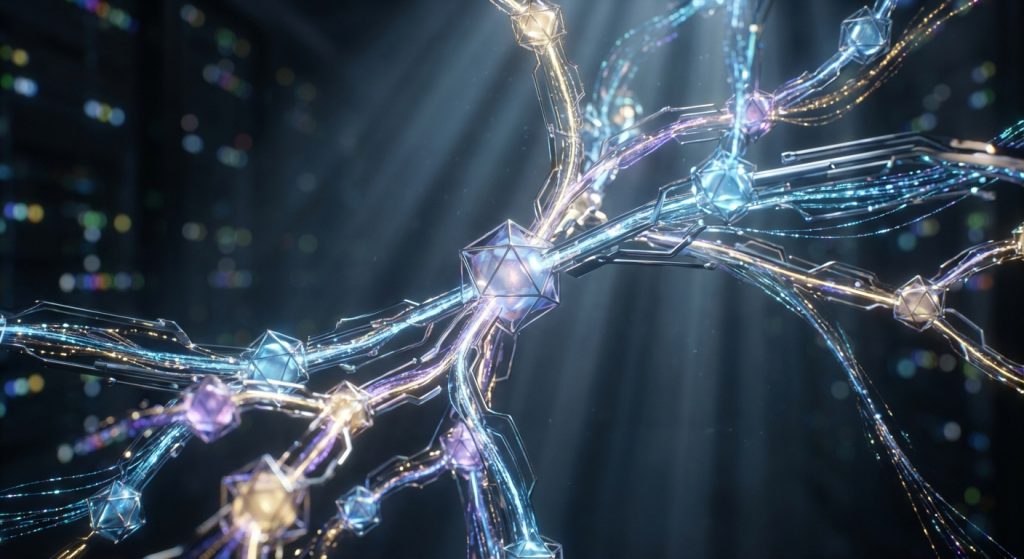
Imagine a tokenizer that doesn’t just create a square of pixels. Instead, it creates a token that represents “oak tree bark” or “wet asphalt reflection.” This approach provides the AI with rich, context-aware information from the very beginning.
What Are Semantic Tokenizers?
Semantic tokenizers are trained on vast libraries of labeled visual data. They learn to identify objects, materials, and even lighting conditions. When they process an image, they don’t just slice it; they analyze and classify its components.For example, a traditional tokenizer sees a car as a collection of red, black, and silver pixel blocks. A semantic tokenizer sees it as “car body,” “tire,” “windshield,” and “chrome trim.” This gives the AI model a much better starting point for generation, inpainting, or style transfer. The results are therefore more coherent and realistic.
Benefits for Hyper-Realistic Texturing
Texturing is where semantic tokenizers truly shine. They can capture and reproduce the subtle properties of materials with incredible accuracy. Because the AI understands it’s working with “worn leather” instead of just “a noisy brown texture,” it can generate details that are consistent with that material’s properties.This allows for much finer control over the final look. Artists can work at a higher level of abstraction, guiding the AI with semantic concepts rather than painstakingly painting pixel-level details. This process mirrors how artists think, leading to a more intuitive and powerful workflow. The use of precision token windows for high-quality upscaling becomes far more effective when the tokens themselves carry semantic meaning.
The Rise of Multi-Modal and Hierarchical Approaches
The future of tokenization for CGI extends even beyond semantics. Two emerging concepts, multi-modal and hierarchical tokenization, are set to revolutionize how we handle complex 3D scenes. These methods address the interconnected nature of visual effects data.
Unifying Geometry, Light, and Motion
A VFX shot is more than just a 2D image. It’s a combination of geometry (meshes), surface properties (textures), lighting information, and motion vectors. Multi-modal tokenizers are designed to handle all these data streams simultaneously.This unified approach ensures consistency across different elements. For example, a multi-modal tokenizer can create linked tokens that describe how a specific light source interacts with a particular material on a moving object. As a result, the AI can generate incredibly realistic motion blur, reflections, and shadows that are physically accurate and temporally stable.
Pyramidal Tokenization for Unmatched Detail
Hierarchical, or pyramidal, tokenization works by processing data at multiple scales. It first creates coarse tokens that represent the overall shape and form of an object. Then, it progressively adds layers of finer and finer tokens that capture intricate details.This is similar to how a painter starts with a broad sketch and then refines it. This method is extremely efficient. The AI can quickly establish the main composition using low-resolution tokens and then dedicate more resources to areas that require high detail. This ensures that no computational power is wasted and that fine details are preserved perfectly.
Practical Implications for Your VFX Pipeline
These technological advancements are not just academic. They have direct, tangible benefits for studio operations. Embracing next-generation tokenizers can lead to significant improvements in both creative output and financial efficiency.The most immediate impact is a dramatic reduction in the manual labor needed to fix AI-generated content. Because semantic and multi-modal tokenizers produce more coherent and accurate results, artists spend less time on cleanup and more time on creative refinement.
Faster Iterations and Creative Freedom
When renders are faster and artifacts are fewer, the creative loop tightens. Your team can iterate on shots more quickly. This allows for greater experimentation and ultimately leads to a better final product. Supervisors can request changes with confidence, knowing that the turnaround will be hours, not days.This speed also gives artists more freedom. They can explore more complex ideas without being limited by technical constraints. The ability to work with high-level semantic concepts empowers them to direct the AI with artistic intent, transforming it from a simple tool into a true creative partner.
Reducing GPU Memory and Render Times
Efficiency is a major advantage. By processing data more intelligently, these new tokenizers drastically cut down on waste. Hierarchical approaches, for example, focus GPU power on the details that matter, rather than treating every pixel equally.This leads to lower VRAM requirements for complex scenes. Moreover, it can significantly reduce render times. For any studio, this translates directly into cost savings. Efficient pipelines are a cornerstone of modern production, and techniques like reducing GPU memory loads via token quantization become even more powerful when combined with smarter tokenization from the start.
Preparing Your Studio for the Tokenizer Revolution
Adopting these new technologies requires a forward-thinking approach. It’s not just about installing new software; it’s about evolving your team’s mindset and skillsets. The transition will be gradual, but preparation should begin now.Firstly, encourage your technical directors (TDs) and pipeline engineers to research these emerging concepts. Understanding the principles behind semantic and multi-modal tokenization will be crucial for integrating them into your existing workflows.
Skillset Evolution for Artists and TDs
For artists, the shift will be towards a more directorial role. They will need to become adept at communicating their creative vision to the AI using semantic prompts and controls. This involves a different way of thinking, focusing on material properties and high-level descriptions.TDs, on the other hand, will be responsible for building and maintaining the new pipelines. They will need to understand how to train or fine-tune tokenizers on your studio’s specific assets and styles. This creates an opportunity to develop a unique, proprietary look that sets your studio apart.
Frequently Asked Questions
What is the main difference between a standard and a semantic tokenizer?
A standard tokenizer breaks an image into generic, uniform blocks of pixels without any understanding of the content. In contrast, a semantic tokenizer analyzes the image and creates tokens that represent meaningful concepts, such as “brick wall,” “human eye,” or “water reflection.” This provides the AI with much richer context.
Will my artists need to become AI researchers to use these tools?
Not at all. The goal of these next-generation tools is to become more intuitive, not more complex. Artists will interact with them using high-level artistic terms and concepts they already know. The complexity will be handled by your technical team in the pipeline backend.
How will this affect our hardware and software budgets?
Initially, there may be some investment in new software or in training custom models. However, the long-term effect should be a reduction in costs. The efficiency gains from smarter tokenization lead to lower GPU usage, faster render times, and reduced need for manual cleanup, which saves both time and money.
When can we expect these next-gen tokenizers to be widely available?
Some forms of advanced tokenization are already being used in cutting-edge research and by large tech companies. We can expect to see them integrated into commercial VFX software and open-source models over the next two to three years. Early adoption could provide a significant competitive advantage.
The Future is Detailed and Efficient
The pursuit of hyper-realism in CGI is relentless. As VFX Supervisors, we are always searching for the next breakthrough that will elevate our work. Next-generation tokenizers represent one of the most promising frontiers in this search.By moving beyond simple pixel blocks to intelligent, context-aware tokens, we can overcome many of the limitations of current AI workflows. These advanced methods promise a future with fewer artifacts, greater detail, and unparalleled creative freedom. Therefore, preparing for this shift today will position your studio to lead the next wave of visual effects innovation.
