
Streamline Your Hiring: The Lean Recruiting Pipeline Flow
Published on Tháng 1 17, 2026 by Admin

Talent acquisition leaders constantly seek efficiency. Therefore, optimizing the recruiting pipeline is crucial. A lean recruiting pipeline focuses on speed and quality. It removes waste. It ensures a smooth candidate experience. This article explores the lean recruiting pipeline flow. We will break down its stages. We will also discuss how to implement it effectively.
What is a Lean Recruiting Pipeline?
A lean recruiting pipeline is a recruitment process. It is designed for maximum efficiency. It emphasizes value delivery. It minimizes waste. Waste in recruiting includes delays, unnecessary steps, and poor communication. Therefore, a lean approach streamlines these areas.
The goal is to attract, engage, and hire top talent quickly. It also aims to provide an excellent candidate experience. This leads to better hiring decisions. It also improves employer brand perception.
The Core Stages of a Lean Recruiting Pipeline
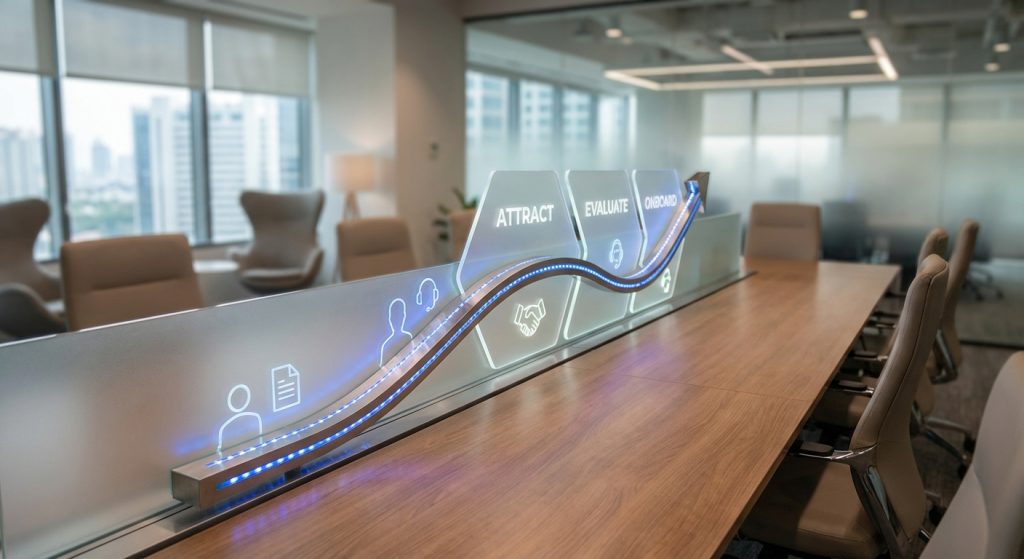
A lean recruiting pipeline typically consists of several key stages. Each stage builds upon the last. Therefore, a well-defined flow is essential.
1. Sourcing and Attraction
This is the initial stage. Here, you identify and attract potential candidates. Firstly, you must understand your ideal candidate profile. Secondly, you need to know where to find them. This involves active sourcing and passive candidate engagement.
- Job Posting Optimization: Craft compelling job descriptions. Use relevant keywords. This helps attract the right applicants.
- Active Sourcing: Proactively search for candidates on platforms like LinkedIn. Build talent pipelines.
- Employer Branding: Showcase your company culture. Highlight employee success stories. This makes your company attractive.
- Referral Programs: Encourage employee referrals. These often lead to high-quality candidates.
Moreover, a lean approach uses data to refine sourcing strategies. It focuses on channels that yield the best results. For example, analyzing which platforms deliver the most qualified candidates helps optimize spend and effort.
2. Screening and Assessment
Once candidates are sourced, they enter the screening phase. The aim here is to quickly identify the most suitable individuals. Therefore, efficient screening is vital.
- Resume Screening: Use applicant tracking systems (ATS) for initial filtering. Focus on essential qualifications.
- Initial Phone Screens: Conduct brief calls to assess basic qualifications and cultural fit. This saves time for both parties.
- Skills Assessments: Implement standardized tests or practical exercises. This objectively measures core competencies. For instance, a coding test for developers is crucial.
- Behavioral Interviews: Focus on past behaviors to predict future performance.
Furthermore, lean recruiting uses technology to automate repetitive tasks. This includes initial resume parsing and scheduling interviews. This frees up recruiters for more strategic activities. You can learn more about optimizing hiring with a skills-based approach to boost efficiency. Boost Hiring Efficiency with Skills-Based Approach.
3. Interviewing and Evaluation
This stage involves deeper assessment. It ensures a thorough evaluation of the top candidates. However, it must remain efficient to maintain momentum.
- Structured Interviews: Use a consistent set of questions for all candidates. This ensures fairness and comparability.
- Panel Interviews: Involve key stakeholders. This gathers diverse perspectives. It also reduces the number of individual interviews.
- Case Studies or Presentations: For certain roles, these can reveal problem-solving skills and strategic thinking.
- Reference Checks: Conduct these promptly for the final candidates.
To maintain a lean flow, set clear evaluation criteria beforehand. This prevents subjective bias. It also speeds up decision-making. Moreover, it’s important to keep the number of interview rounds to a minimum. Excessive interviews can lead to candidate drop-off.
4. Offer and Onboarding
The final stages are critical for closing the deal and integrating the new hire.
- Timely Offer Extension: Extend the offer quickly after the final decision. Delays can result in losing the candidate.
- Negotiation: Be prepared to negotiate, but have clear boundaries.
- Background Checks: Complete these efficiently.
- Streamlined Onboarding: Provide a clear onboarding plan. Ensure all necessary paperwork and equipment are ready. A smooth onboarding process is key to retention.
Therefore, a lean approach ensures that the offer is competitive and extended swiftly. The onboarding process should be designed to integrate the new employee quickly and effectively. This includes providing necessary resources and training from day one. Mastering the workforce value stream from hiring to offboarding is essential. Optimize Hiring to Offboarding: The Workforce Value Stream.
Benefits of a Lean Recruiting Pipeline
Implementing a lean recruiting pipeline offers significant advantages. These benefits impact both the organization and the candidates.
- Reduced Time-to-Hire: By eliminating unnecessary steps, you can fill positions faster. This is especially important for critical roles.
- Improved Candidate Experience: A streamlined process shows respect for candidates’ time. It leads to positive feedback and a stronger employer brand.
- Lower Cost-Per-Hire: Efficiency reduces the resources needed for recruitment. This includes time, money, and personnel.
- Higher Quality Hires: A focused process helps identify the best talent more effectively. It reduces the chance of making a poor hire.
- Enhanced Productivity: Faster hiring means new employees contribute sooner. This boosts overall team productivity.
Furthermore, a lean pipeline supports strategic workforce planning. By understanding the flow and its bottlenecks, organizations can better predict hiring needs and timelines. This aligns with the principles of mastering efficiency-driven staffing plans. Mastering Efficiency-Driven Staffing Plans.
Key Principles for a Lean Recruiting Pipeline
Adopting lean principles requires a shift in mindset and process. Here are some core tenets:
- Identify Value: Define what truly adds value to the hiring process. This is securing the right talent.
- Map the Value Stream: Document every step of your current process. Identify all activities.
- Create Flow: Ensure a smooth, uninterrupted movement of candidates through the pipeline. Remove bottlenecks.
- Establish Pull: Let demand dictate the pace. Avoid pushing candidates through too quickly or holding them up unnecessarily.
- Seek Perfection: Continuously look for ways to improve. Eliminate waste systematically.
In essence, lean recruiting is about doing more with less. It focuses on continuous improvement. It prioritizes speed and quality.
Tools and Technologies for Lean Recruiting
Technology plays a vital role in achieving a lean recruiting pipeline. Automation and data analytics are key enablers.
- Applicant Tracking Systems (ATS): Essential for managing candidate data, automating workflows, and tracking progress.
- AI-Powered Sourcing Tools: Help identify and engage passive candidates more effectively.
- Video Interviewing Platforms: Allow for asynchronous or live interviews, saving travel time and scheduling complexities.
- Candidate Relationship Management (CRM) Systems: Help nurture talent pipelines and engage potential candidates proactively.
- Skills Assessment Software: Provides objective data on candidate capabilities.
Leveraging these tools can significantly reduce manual effort. It also provides valuable insights for optimizing the process. For example, data from an ATS can reveal where candidates typically drop off. This allows for targeted improvements.
Common Bottlenecks in Recruiting Pipelines
Even with a lean approach, bottlenecks can occur. Identifying and addressing them is crucial.
- Slow Hiring Manager Feedback: Delays in interview feedback can stall the process.
- Excessive Interview Rounds: Too many stages can frustrate candidates and lead to drop-offs.
- Poorly Defined Roles: Unclear job requirements make it difficult to screen effectively.
- Inefficient Scheduling: Coordinating schedules for multiple interviewers and candidates can be time-consuming.
- Lack of Data Analysis: Not using data to identify bottlenecks prevents continuous improvement.
Therefore, proactive communication with hiring managers is essential. Establishing service level agreements (SLAs) for feedback can help. Moreover, regularly reviewing pipeline metrics is key. This helps in identifying and resolving these issues promptly. Understanding workforce ROI is also important for measuring the impact of efficient hiring. Measure Workforce ROI: Essential Tools for HR Leaders.
Implementing a Lean Recruiting Pipeline: A Step-by-Step Guide
Transitioning to a lean recruiting pipeline requires a structured approach.
- Assess Your Current Process: Map your existing pipeline. Identify every step and its purpose.
- Identify Waste: Look for delays, redundant tasks, and inefficiencies.
- Redesign the Pipeline: Streamline steps. Automate where possible. Define clear evaluation criteria.
- Leverage Technology: Implement or optimize your ATS and other recruitment tools.
- Train Your Team: Ensure recruiters, hiring managers, and interviewers understand the new process and their roles.
- Measure and Iterate: Track key metrics like time-to-hire, cost-per-hire, and candidate satisfaction. Use this data to make continuous improvements.
For instance, implementing skills-based hiring can be a significant step towards lean recruiting. This approach focuses on demonstrable abilities rather than just credentials. It can drastically improve the quality of hires and reduce time spent on interviews that don’t assess true capabilities. Boost Hiring Efficiency with Skills-Based Approach.
Conclusion
A lean recruiting pipeline is not just a trend; it’s a strategic imperative. It drives efficiency, enhances candidate experience, and leads to better hires. By focusing on value, eliminating waste, and leveraging technology, talent acquisition leaders can build a powerful and agile recruitment process. Continuous measurement and iteration are key to maintaining its effectiveness. Therefore, embracing lean principles will position your organization for sustained success in attracting and retaining top talent.
Frequently Asked Questions
What is the primary goal of a lean recruiting pipeline?
The primary goal is to attract, engage, and hire top talent efficiently while minimizing waste and providing an excellent candidate experience.
How does a lean pipeline reduce costs?
It reduces costs by minimizing time-to-hire, decreasing the need for excessive resources, and lowering the risk of costly bad hires through more effective assessment.
Can technology truly make a recruiting pipeline lean?
Yes, technology like ATS, AI sourcing tools, and video interviewing platforms can automate tasks, improve communication, and provide data for optimization, all crucial for a lean process.
What are the biggest challenges in implementing a lean recruiting pipeline?
Challenges often include resistance to change, lack of buy-in from hiring managers, inefficient existing processes, and the difficulty of identifying and eliminating “waste” effectively.
How often should a lean recruiting pipeline be reviewed and updated?
It should be reviewed regularly, ideally quarterly or after significant hiring campaigns, to identify new bottlenecks and opportunities for further optimization.
