
Operationalizing Cloud Cost Policy: A Practical Guide
Published on Tháng 1 15, 2026 by Admin

Federal agencies face increasing pressure to justify every dollar spent. Cloud investments are no exception. Modernization efforts must extend beyond just infrastructure. To truly deliver value, cloud strategies need fiscal transparency, operational soundness, and alignment with mission objectives. This is where operationalizing cloud cost policy becomes crucial. It equips agencies with the necessary tools and governance to maximize mission impact, reduce unnecessary spend, and ensure every cloud investment directly supports public service delivery. Effectively managing cloud finances is no longer optional; it’s a strategic imperative.
This article will explore how to move from basic cloud adoption to strategic, mission-aligned cloud operations. We will cover maturing environments, optimizing spend, and ensuring technology decisions accelerate agency goals. Ultimately, we will focus on the discipline of cloud financial management, often referred to as FinOps, as a key enabler for achieving these outcomes. Without a structured approach, agencies risk overspending, losing stakeholder trust, and failing to meet critical mission objectives.
The FinOps Framework: More Than Just a Policy
FinOps offers a robust framework for managing, optimizing, and justifying cloud costs. However, a framework alone is insufficient. Without the right tools and expertise, FinOps initiatives often falter. This is particularly true in government environments where implementation can be complex. A common challenge is fragmented visibility. Disconnected cloud accounts, management groups, and projects create silos. This makes cost analysis manual, error-prone, and reactive. Furthermore, inconsistent or missing tags, such as Project, CostCenter, or MissionOwner, undermine attribution and compliance efforts. Over-provisioned resources and missed savings opportunities also contribute to unnecessary spend. Manual budget tracking using static spreadsheets further hinders proactive financial management.
To overcome these barriers, agencies must build structured FinOps programs. These programs need to be operationalized through automation and reporting capabilities. This ensures that financial governance is embedded into every layer of cloud operations. The goal is to achieve tangible outcomes, such as avoiding budget surprises and boosting tag accuracy.
Key Pillars of Cloud Cost Policy Operationalization
Operationalizing cloud cost policy involves several key areas. Firstly, achieving comprehensive cost visibility and accurate forecasting is paramount. Secondly, ensuring continuous compliance through automated tagging is essential. Thirdly, automating governance and minimizing operational risk through policy-as-code is vital. Finally, eliminating waste and maximizing cloud efficiency through optimization is a continuous effort. These pillars, when addressed effectively, lead to increased transparency and better financial accountability.
Achieving Cost Visibility and Forecasting
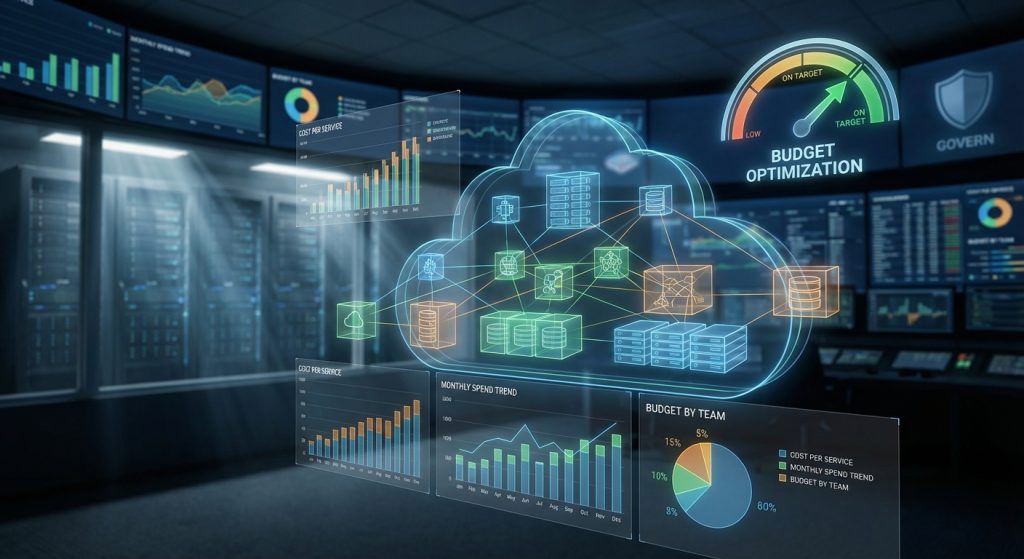
A fundamental step in operationalizing cloud cost policy is gaining unified, real-time cost visibility. This is achieved by ingesting native billing data from various cloud providers like AWS, Azure, GCP, and OCI. With this data, agencies can create multi-cloud dashboards that offer clear insights into spending patterns. Forecasting capabilities are also critical. These allow for proactive identification of potential budget overruns. Budget alerting, such as threshold notifications when spending reaches 80% of the allocated amount, helps prevent unplanned overspend. Reporting at the tag, account, and organizational unit (OU) level provides granular detail. This ensures accurate chargeback reporting and allows for proactive alerts tied to specific mission objectives.
A best practice here is to standardize critical tags across all accounts before data ingestion. Aligning dashboard views with budget structures further enhances accuracy. This process improves coordination between financial officers and mission leads. Consequently, resources remain aligned with strategic priorities. This approach directly addresses the challenge of manual budget tracking and reactive financial management.
Boosting Tag Accuracy and Ensuring Continuous Compliance
Inconsistent tagging is a significant obstacle to effective cloud cost management. Therefore, implementing automated tagging policies is crucial. This ensures that critical tags are applied consistently and accurately. Tools can enable automated enforcement of agency-specific tagging standards. This includes applying tags at the project or account creation stage. Furthermore, these tools can detect and remediate missing or non-compliant tags. This alignment with governance, funding, and mission tagging standards is essential for accurate cost attribution. It also supports continuous compliance monitoring and strengthens financial accountability across all programs.
A recommended practice is to implement tagging templates during the onboarding process. Tying compliance to internal Authority to Operate (ATO) or budget processes reinforces the importance of tagging. Regular tag audits, ideally as part of quarterly cloud reviews, help maintain accuracy. As a result, tag compliance rates improve rapidly, leading to more reliable cost allocation and better financial oversight.
Automating Governance and Minimizing Operational Risk
Policy-as-code governance is a powerful mechanism for enforcing compliance and controlling resource usage across cloud platforms. This approach allows agencies to define rules that automatically manage resources. For instance, policies can be set to shut down non-production environments after business hours. They can also enforce restrictions on instance types or regions. Role-based access controls (RBAC) can be aligned with security policies for granular permission management. This ensures that only authorized personnel can access or modify resources.
It is important to align these cloud rules with existing governance frameworks, such as NIST 800-53 controls. This ensures that enforcement does not conflict with mission delivery requirements. By implementing these enforceable guardrails, agencies can significantly reduce operational risk. They also improve consistency across their cloud environments. This is particularly important as environments scale, protecting mission-critical workloads.
Eliminating Waste and Maximizing Cloud Efficiency
Cloud cost optimization is an ongoing process. An optimization engine can identify opportunities to reduce spend based on real-time and historical utilization metrics. This includes providing rightsizing recommendations. For example, it can suggest reducing instance sizes if CPU utilization has been consistently low. It can also offer suggestions for purchasing Savings Plans (SPs) or Reserved Instances (RIs) based on usage patterns. Cleaning up idle volumes and unattached resources further eliminates waste.
Running monthly optimization reports and incorporating their findings into existing cloud operations review cycles is a key best practice. Pairing cleanup actions with approval workflows, tied to specific cost thresholds, ensures controlled execution. Consequently, agencies can eliminate resource waste, increase cost efficiency, and free up budget. This budget can then be redirected to high-impact, mission-driven initiatives. For instance, optimizing Reserved Instance portfolios can yield significant savings. Effective management of RIs is crucial for maximizing cloud spend efficiency.
Increasing Transparency with Automated Chargeback and Showback
To foster accountability and transparency, implementing automated chargeback and showback mechanisms is essential. This allows for automated internal billing across different funding structures or mission units. Chargeback models can be defined based on OUs and projects. Exportable reports in various formats (CSV, JSON, PDF) facilitate analysis. Integration with other systems like ServiceNow, Jira, or Tableau via APIs or webhooks enhances workflow automation. Defining clear chargeback models is a critical best practice. This ensures that costs are accurately attributed to the consuming teams or projects. This transparency helps drive cost-conscious behavior across the organization.
The practice of FinOps, which unites finance and IT, is key to this transparency. FinOps fundamentals emphasize collaboration to achieve continuous cost management. By making costs visible and attributable, teams can make more informed decisions about their cloud usage.
The Role of People, Processes, and Platforms
Effectively operationalizing cloud cost policy requires a holistic approach. This involves focusing on people, processes, and platforms. People need the right skills and understanding of FinOps principles. Processes must be defined and documented, from tagging standards to budget approval workflows. Platforms, such as cloud financial management tools, provide the necessary automation, visibility, and control. A modern cloud operating model requires continuous, contextual governance built into the delivery process. This is supported by the right combination of people, processes, and platforms. Cloud governance is evolving rapidly, and legacy models often struggle to keep pace with the speed, sprawl, and scale of multi-cloud environments as noted by Wiz. Therefore, a practical framework is essential for scaling securely and resiliently.
For federal agencies, partnering with experts who understand the nuances of government IT can be invaluable. These partners can help build structured FinOps programs and operationalize them using advanced capabilities. This collaboration ensures that agencies gain the automation, visibility, and governance needed for mission-ready outcomes. It also ensures these outcomes are delivered faster, more securely, and with greater fiscal discipline.
Operationalizing Cyber Risk Tolerance and Cloud Governance
Beyond financial costs, operationalizing cloud governance also encompasses managing cyber risk. Cyber risk tolerance defines how much risk an organization is willing to accept. Operationalizing this means embedding it into daily decisions, culture, and workflows. This allows security teams to act quickly and confidently when threats emerge. Translating strategic boundaries into measurable behaviors, response protocols, and real-time governance is key. This shifts the approach from theory to execution. Operationalizing cyber risk tolerance is critical for an effective cybersecurity risk management practice.
In the context of cloud cost policy, this means ensuring that cost optimization efforts do not compromise security. For example, shutting down non-production environments is a cost-saving measure, but it must be done without impacting security posture. Similarly, enforcing instance type restrictions should align with both cost and security requirements. A five-layer framework—strategy, foundations, enablement, operations, and assurance—can help organizations scale securely and resiliently. Continuous, contextual governance embedded into delivery pipelines is essential in today’s multi-cloud world.
Frequently Asked Questions (FAQ)
What is FinOps and why is it important for cloud cost policy?
FinOps, or Cloud Financial Management, is a discipline that brings financial accountability to the variable spend model of the cloud. It’s crucial for operationalizing cloud cost policy because it provides a framework and practices to manage, optimize, and justify cloud spend. This ensures that cloud investments align with business objectives and deliver maximum value.
What are the common challenges in implementing FinOps in government agencies?
Common challenges include fragmented visibility across different cloud environments, inconsistent or missing tagging, over-provisioned resources, and manual budget tracking. These issues make it difficult to gain accurate cost attribution and proactively manage spend.
How does automated tagging improve cloud cost management?
Automated tagging ensures that resources are consistently and accurately tagged with relevant information like project names or cost centers. This improves cost attribution, enables better reporting, and supports continuous compliance monitoring. It is a critical step for financial accountability.
What is policy-as-code and how does it relate to cloud cost policy?
Policy-as-code allows you to define and enforce governance rules for your cloud environment using code. This enables automated enforcement of policies related to resource usage, security configurations, and cost controls. For instance, it can automatically shut down idle resources to save costs.
What are the benefits of automated chargeback and showback?
Automated chargeback and showback increase transparency by attributing costs to specific teams or projects. This fosters a sense of ownership and encourages cost-conscious behavior. It helps in understanding where cloud spend is occurring and why.
Conclusion
Operationalizing cloud cost policy is a continuous journey that requires a blend of strategic planning, robust technology, and skilled personnel. By embracing FinOps principles and leveraging appropriate tools, organizations can achieve greater financial transparency, optimize spend, and ensure their cloud investments directly support their core missions. The challenges of fragmented visibility, inconsistent tagging, and manual processes can be overcome with automation and structured governance. Ultimately, a mature FinOps practice empowers agencies to maximize the value of their cloud resources, reduce waste, and drive fiscal discipline. This proactive approach not only saves money but also enhances mission effectiveness and stakeholder trust. For organizations looking to refine their cloud spend, understanding concepts like FinOps engineering best practices can provide a solid foundation.
