
Sustainable Cloud Scaling: A Guide to Green Computing
Published on Tháng 1 6, 2026 by Admin

Cloud computing is the backbone of the modern digital economy. However, this incredible capability comes with a significant environmental cost. As businesses scale their operations, the demand for cloud resources grows, leading to increased energy consumption and carbon emissions. Therefore, achieving sustainable cloud scaling is no longer optional; it’s a critical business and environmental imperative.
This guide explores the challenges and solutions for building a greener cloud. We will cover hardware innovations, intelligent software strategies, and the complex trade-offs that sustainability leaders must navigate. Ultimately, the goal is to scale digital infrastructure without compromising our planet’s future.
The Soaring Environmental Cost of the Cloud
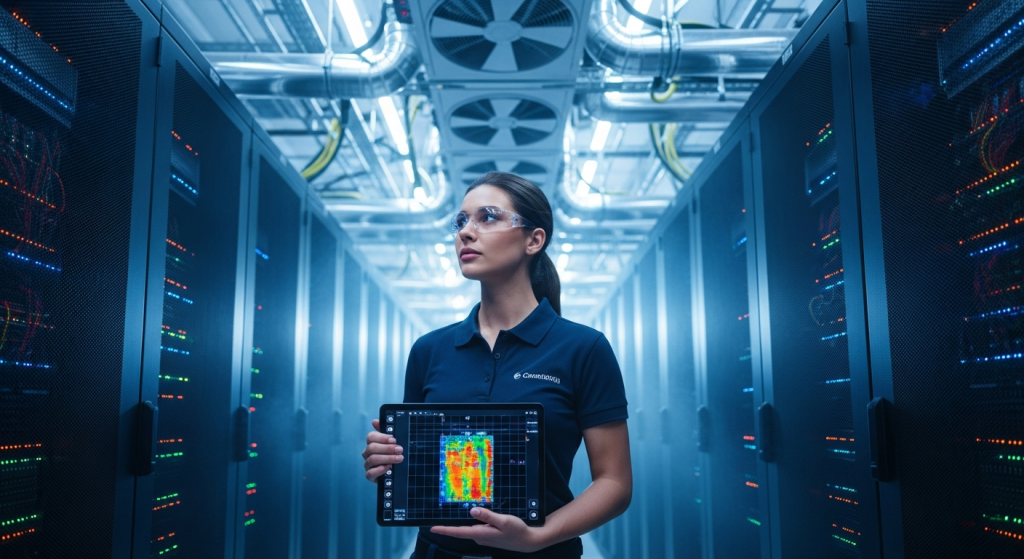
Data centers are the physical heart of the cloud. These massive facilities house servers, storage, and networking equipment. As a result, they consume enormous amounts of energy to run and cool the hardware.
In fact, data centers are estimated to consume around 1.5% of the world’s electricity. This level of consumption makes them responsible for approximately 2% of global CO2 emissions. For many companies, this impact directly conflicts with their corporate Environmental, Social, and Governance (ESG) goals.
Power as a Finite Resource
The problem extends beyond carbon emissions. Power itself is a real and growing constraint. In many regions, the electrical grid cannot support the rapid construction of new, power-hungry data centers. This physical limitation directly impacts the cloud’s future capacity to scale. Therefore, the industry must find ways to do more with less. Real innovation is required to reverse the current course of rising power consumption.
Key Strategies for Sustainable Cloud Scaling
Addressing the cloud’s environmental footprint requires a multi-faceted approach. It involves rethinking everything from the processors inside servers to the software that manages workloads. Fortunately, significant progress is being made on several fronts.
Hardware Innovation: The Foundation of Efficiency
The most fundamental step toward sustainability is improving energy efficiency at the core. For decades, the industry relied on legacy x86 architectures. However, a major shift is underway toward more efficient designs.
Cloud Native Processors, such as those based on ARM architecture, are designed for high performance and low power consumption. These processors provide more compute output for every watt of power input. This shift is crucial for sustainable scaling. Major companies like Oracle and HPE are now offering servers and cloud instances based on these efficient processors, signaling a clear industry trend. Exploring ARM processor cost benefits reveals how this efficiency translates directly into financial savings and a lower carbon footprint.
Intelligent Software & Workload Management
Hardware is only one part of the equation. In addition, intelligent software plays a vital role in minimizing energy use. Green Cloud Computing focuses on using resources more efficiently through smart management.
One of the most important strategies is Dynamic Voltage and Frequency Scaling (DVFS). This technique allows a server’s processor to adapt its performance to the current workload. During periods of low demand, it reduces voltage and frequency, saving significant amounts of power. Conversely, it scales up when more performance is needed, ensuring quality of service is maintained.
Other software-based methods include:
- Auto-scaling: Automatically adjusting the number of active servers to match real-time demand, preventing over-provisioning.
- Intelligent Job Scheduling: Distributing computing tasks in the most energy-efficient way across available resources.
- Sustainable Coding Practices: Encouraging developers to write efficient code that uses fewer resources.
The Role of Major Cloud Providers
Major cloud providers like Amazon Web Services (AWS), Google Cloud, and Microsoft Azure are central to the sustainability conversation. They have all made significant public commitments to reduce their environmental impact.
For example, Microsoft aims to be carbon-negative by 2030, while Google intends to operate on carbon-free energy 24/7 in the same timeframe. Similarly, AWS targets 100% renewable energy use for its operations by 2025. These initiatives are driving massive investments in wind and solar projects.
However, critics often raise concerns about “greenwashing,” where marketing claims can overshadow actual progress. As a result, it is essential for sustainability leads to look for transparency and verifiable data to back up these promises.
Beyond Carbon: The Water-Footprint Dilemma
A truly holistic view of sustainability must look beyond just carbon and energy. Recent research highlights a complex and often conflicting relationship between carbon footprint and water footprint in data centers.
Cooling systems are essential for data center operations, and many of them use large quantities of water. Research has revealed that strategies designed to optimize for carbon efficiency can sometimes increase water consumption, and vice-versa. To address this, new tools like WaterWise, a novel job scheduler for parallel workloads, are being developed. These tools aim to co-optimize both carbon and water usage across geographically distributed data centers, representing the next frontier in sustainable computing.
How to Evaluate Your Cloud’s Sustainability
As a sustainability lead, you need actionable ways to assess and improve your organization’s cloud operations. This involves asking the right questions and demanding transparency from your providers. A key part of this is improving your carbon footprint efficiency, which benefits both your ESG metrics and your bottom line.
Look for Transparency and Verifiable Data
Don’t just accept marketing claims. A genuinely green provider should offer clear evidence of their progress. This includes:
- Regular sustainability reports with verifiable data.
- Third-party audits of their operations and energy sources.
- Information on Power Usage Effectiveness (PUE), a key metric for data center efficiency.
- Details about their hardware recycling and waste heat reuse programs.
Assess Hardware and Architecture
The underlying hardware your workloads run on matters immensely. Ask your cloud provider about the processor architectures available. Choosing instances that run on modern, energy-efficient processors like Ampere can significantly reduce your environmental impact. The shift away from older, power-hungry technology is a clear indicator of a provider’s commitment to sustainable innovation.
Frequently Asked Questions (FAQ)
What is the primary goal of sustainable cloud scaling?
The main goal is to increase compute performance and capacity while reducing power consumption and overall environmental impact. This means finding ways to support business growth without proportionally increasing the carbon and water footprint of the required digital infrastructure.
What is Dynamic Voltage and Frequency Scaling (DVFS)?
DVFS is a key energy-saving technique used in modern processors. It dynamically adjusts the processor’s voltage and operating frequency based on the current workload. It lowers power during idle times and increases it for intensive tasks, optimizing energy use without sacrificing performance.
Are all major cloud providers equally sustainable?
No, while all major providers have sustainability initiatives, their approaches, goals, and progress differ. Some may focus more on purchasing renewable energy certificates, while others invest in hardware efficiency or innovative cooling. It’s important to evaluate each provider based on transparent reporting and verifiable data, not just promises.
Is cloud sustainability only about carbon emissions?
No, it’s a broader issue. While carbon is a primary focus, a holistic approach also considers water consumption for cooling, electronic waste from retired hardware, and the use of non-toxic materials in server manufacturing. The most sustainable solutions balance these different environmental factors.
In conclusion, sustainable cloud scaling is a complex but achievable goal. It requires a commitment to innovation at every level, from the silicon in processors to the software that manages global data centers. By prioritizing energy-efficient hardware, adopting intelligent workload management, and demanding transparency from providers, sustainability leaders can guide their organizations toward a greener, more responsible, and ultimately more scalable digital future. The momentum is building, and the time for action is now.
