
Inflation: The Silent Thief of Your Savings
Published on Tháng 12 23, 2025 by Admin
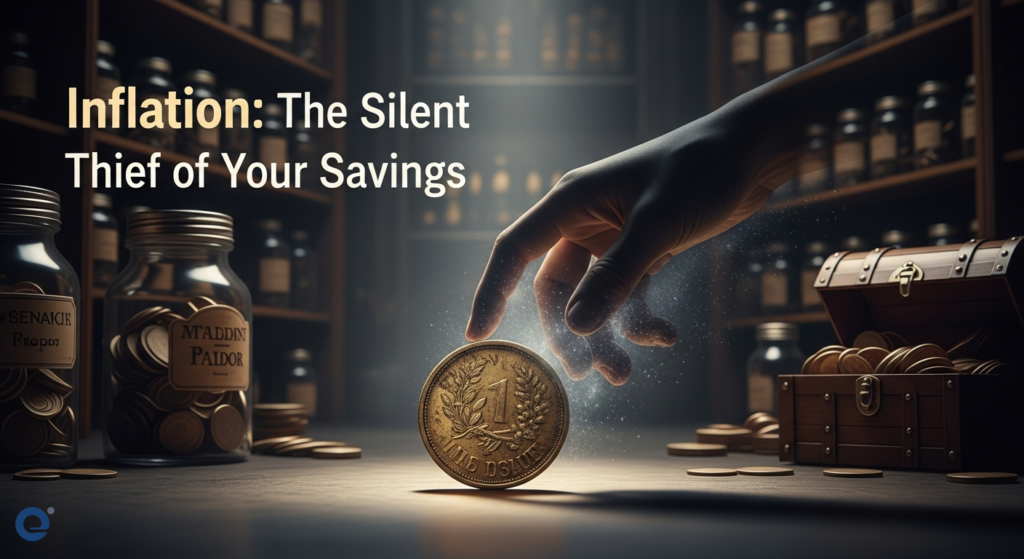
Inflation is a constant, yet often unnoticed, force. It silently erodes the purchasing power of your hard-earned money every single day. For traditional bank depositors, this can feel like a slow drain on their capital. Understanding how inflation works is crucial. It’s the “invisible tax” that diminishes the value of your savings over time. Therefore, simply saving money in a bank account is no longer enough to maintain its value. Your money needs to actively work for you.
This article will explore how inflation quietly erodes savings capital daily. We will also discuss why saving alone is insufficient. Furthermore, we will highlight strategies to make your money work harder. This proactive approach is essential to protect your financial future.
Understanding the Erosion of Purchasing Power
Imagine your savings account. It’s a safe place for your money. However, if the interest rate is lower than the inflation rate, your money is actually losing value. This is because the cost of goods and services is rising faster than your savings are growing.
For instance, if inflation is at 3% and your savings account yields only 1%, you are experiencing a net loss of 2% in purchasing power. This might seem small daily. However, over months and years, this loss accumulates significantly. As a result, the money you save today will buy less in the future.
This silent erosion means your financial goals become harder to reach. A down payment on a home, retirement, or even everyday expenses become more costly. Therefore, it is vital to address this issue proactively. Don’t let inflation steal your future.
The Impact on Everyday Expenses
Inflation directly affects the cost of daily necessities. Think about groceries, gas, and utilities. Prices for these items tend to rise with inflation. Consequently, your fixed income or savings can buy fewer items over time. This reduces your standard of living.
For example, a basket of groceries that cost $100 last year might now cost $103. This 3% increase might seem manageable. However, imagine this happening year after year. Your savings simply can’t keep pace if they are not earning a competitive return.
This is why saving alone is not a winning strategy. Your money needs to grow. It needs to outpace the rising costs. Otherwise, you are effectively taking a step backward financially with each passing year.
Why Traditional Savings Accounts Aren’t Enough
Traditional savings accounts are designed for safety and accessibility. They offer a low interest rate, typically close to zero. For example, some accounts might offer a negligible 0.01% interest. This is far below the current inflation rates. As a result, your money sits idle and loses value.
The core issue is the mismatch between savings interest rates and inflation. When inflation is higher than the interest earned, your real return is negative. This means your money’s purchasing power is declining. Therefore, relying solely on these accounts for long-term wealth preservation is a losing proposition.
The Myth of “Safe” Money
While savings accounts are considered “safe” in terms of principal protection, they are not safe from the ravages of inflation. The money in these accounts is losing its buying power. This is a form of wealth erosion that is often overlooked. It’s like having a leaky bucket; the water (your money’s value) is slowly draining away.
Source 4 highlights this point, stating, “Inflation quietly erodes your buying power every day—make sure your money is working as hard as you do.” Cash sitting still is cash losing value. This is a fundamental concept that traditional bank depositors need to grasp.
Strategies to Make Your Money Work Harder
The good news is that there are effective strategies to combat inflation. These strategies involve making your money work for you. This means moving beyond traditional savings and exploring avenues for growth. Financial optimization is key.
The goal is to ensure every dollar you own has a specific job. This includes earning a return that at least matches, and ideally exceeds, inflation. By understanding different financial tools, you can build a robust plan.
Building a “Savings Ladder”
A popular strategy is building a “savings ladder.” This involves structuring your accounts to balance growth with accessibility. It’s about assigning specific roles to different types of accounts.
The foundation is often a high-yield checking account. While traditionally transactional, modern financial education suggests treating these as earning tools. Some accounts offer tiered rewards based on activity. For example, maintaining a direct deposit and using eStatements can earn a consistent Annual Percentage Yield (APY).
The next rung is a high-yield savings account (HYSA). This is ideal for your emergency fund. It offers a significantly better APY than standard savings accounts. UCU’s High Yield Savings Account, for instance, offers a competitive APY on balances over $2,500. Keeping emergency funds here creates a psychological barrier against impulsive spending while maintaining liquidity.
The peak of the ladder involves certificates of deposit (CDs) or similar instruments for timed goals. When you have money you won’t need for months or years, CDs offer a higher, guaranteed fixed rate. This is a trade-off for reduced liquidity. Laddering CDs with different maturity dates ensures regular access to funds while still benefiting from higher long-term rates.
Bundling these accounts under one institution simplifies management. Automating transfers from checking to savings can ensure you’re always maximizing growth potential. This approach ensures your financial foundation is both stable and productive.
Investing in Growth Opportunities
Beyond savings accounts, investing is a powerful tool against inflation. Investing allows your capital to grow. It can generate returns that outpace rising costs. This is essential for long-term wealth building.
Source 1 suggests that making your money work for you is vital. Trading stocks on platforms like ARM ONE offers a way to access the stock market. This can help your money grow. As Asset & Resource Management Holding Company (ARM) states, “It’s time to make your money work for you!”
Investing can take many forms. It can include stocks, bonds, real estate, or other assets. The key is to choose investments that align with your risk tolerance and financial goals. Diversification is also crucial to manage risk. You can learn more about a simple formula for optimal portfolio diversification.

For instance, smart, tax-efficient investing can turn idle dollars into growth. This growth can keep pace with inflation. This is a more effective strategy than letting your money sit stagnant. As Source 4 emphasizes, “Your money should work as hard as you do.”
🚨 STOP! Your Savings Account is a LEAKING BUCKET! 💸
The Psychological Impact of Inflation
Inflation doesn’t just affect your bank balance; it affects your mindset. When you see prices rising and your savings stagnating, it can be demotivating. Source 3 touches upon this by describing a feeling of being worn down. It states, “And while you’re stuck in the cycle, inflation quietly erodes your money, stealing the progress you thought you’d be making by now.”
This feeling of stagnation can lead to a sense of helplessness. It can make achieving financial goals seem impossible. This is why taking action is so important. It’s about regaining control over your financial future.
Combating the “Busywork” Mentality
Sometimes, people feel stuck in a cycle of earning and spending. This is often exacerbated by inflation. They might feel like they are working hard but not making real progress. This is where investing and smart financial planning come in.
By making your money work for you, you can break this cycle. You can start seeing your wealth grow. This can lead to a greater sense of accomplishment and financial security. It shifts the focus from just earning to building wealth.
Key Takeaways for Savers
For traditional bank depositors, the message is clear: act now. Inflation is a real threat to your savings. However, it is a threat that can be managed with the right strategies.
- Understand Inflation: Recognize that inflation erodes purchasing power. Your savings may be losing value even if the balance appears stable.
- Interest Rates vs. Inflation: Always compare the interest rate on your savings accounts to the current inflation rate. If inflation is higher, your money is losing value.
- Diversify Beyond Savings: Explore high-yield savings accounts, certificates of deposit, and investment opportunities. These can offer better returns.
- Build a Savings Ladder: Structure your finances to balance accessibility with growth. Assign specific jobs to your money.
- Make Money Work: Don’t let your money sit idle. Proactive investing is key to outpace inflation.
Source 5 emphasizes this, stating, “Don’t let the invisible tax of inflation eat away at your goals and steal your future.” By implementing these strategies, you can protect your capital and work towards your financial aspirations.
Frequently Asked Questions
What is inflation and how does it affect my savings?
Inflation is the rate at which the general level of prices for goods and services is rising. Consequently, purchasing power is falling. For your savings, this means that the same amount of money will buy fewer goods and services over time. If your savings account interest rate is lower than the inflation rate, your money is effectively losing value.
Are my savings accounts truly safe if inflation is high?
While your principal amount in a savings account is protected from loss, its purchasing power is not. High inflation means the money in your savings account will buy less in the future. Therefore, from a purchasing power perspective, your savings are not truly safe from the effects of inflation.
What’s the difference between a regular savings account and a high-yield savings account (HYSA)?
A regular savings account typically offers very low interest rates, often close to zero. A high-yield savings account (HYSA) offers a significantly higher interest rate, allowing your money to grow faster and better combat inflation. HYSAs are still FDIC-insured (or equivalent) up to certain limits, making them a safe place for your emergency funds. You can learn more about building an emergency fund.
Is it risky to invest money to combat inflation?
All investments carry some level of risk. However, the risk of doing nothing and letting inflation erode your savings can be even greater. Diversifying your investments across different asset classes can help manage risk. It’s important to choose investments that align with your risk tolerance and financial goals.
How can I start making my money work harder if I’m new to investing?
Start by educating yourself about different investment options. Consider opening a high-yield savings account first. Then, explore low-cost index funds or exchange-traded funds (ETFs) that offer broad market diversification. Many online brokers offer resources and tools for beginners. Automating your savings and investments can also help you build wealth consistently.
