
Applying Artificial Intelligence (AI) to automate and optimize customer service.
Published on Tháng 12 23, 2025 by Admin
# AI Revolutionizes Customer Service: Automation & Optimization
Artificial intelligence (AI) is no longer a futuristic concept; it’s a present-day reality transforming businesses. For Customer Success Leads and IT Managers, understanding and applying AI to customer service is crucial for staying competitive. AI offers powerful tools to automate tasks, optimize workflows, and significantly enhance customer satisfaction. This article explores how AI is revolutionizing customer service, providing actionable insights for implementation.
## The Growing Impact of AI in Business
Businesses worldwide are embracing AI to gain a competitive edge. AI enables data-driven decisions, boosts efficiency, and fosters innovation. Its adoption, which gained momentum in the early 2010s, now spans marketing, finance, healthcare, and more. The global AI market is projected to grow from $621.19 billion in 2024 to $2.74 trillion by 2032 . This growth highlights AI’s undeniable benefits, including higher productivity and enhanced customer satisfaction.
## Understanding AI and Machine Learning
It’s important to distinguish between AI and machine learning (ML). AI refers to a computer’s ability to mimic human thought and perform tasks. Machine learning, conversely, is a subset of AI. It involves technologies and algorithms that allow systems to learn from data, identify patterns, and improve over time without explicit programming .
### Key AI Technologies in Practice
Several AI technologies underpin these advancements:
- Machine Learning: Enables systems to learn from data.
- Deep Learning: An advanced ML method using neural networks.
- Neural Networks: Mimic the human brain for complex pattern analysis.
- Computer Vision: Allows computers to interpret images.
- Natural Language Processing (NLP): Enables computers to understand and use human language.
## AI’s Role in Optimizing Customer Service
AI is fundamentally reshaping customer service by automating routine tasks and providing deeper insights into customer needs. This leads to more efficient operations and improved customer experiences.
### Enhancing Customer Relationship Management (CRM)
AI-driven CRM tools foster stronger customer connections. They provide actionable insights and predict customer preferences. This allows for more personalized and proactive support.
#### Personalized Marketing Campaigns
AI platforms analyze customer data to deliver tailored marketing content. This boosts engagement and conversion rates. For example, Salesforce Einstein uses AI to personalize marketing efforts.
#### Predictive Customer Support
AI tools can analyze support tickets. They efficiently route queries and predict customer needs. This significantly reduces resolution times. Zendesk’s AI tools are a prime example of this capability.
#### Chatbots and Virtual Assistants
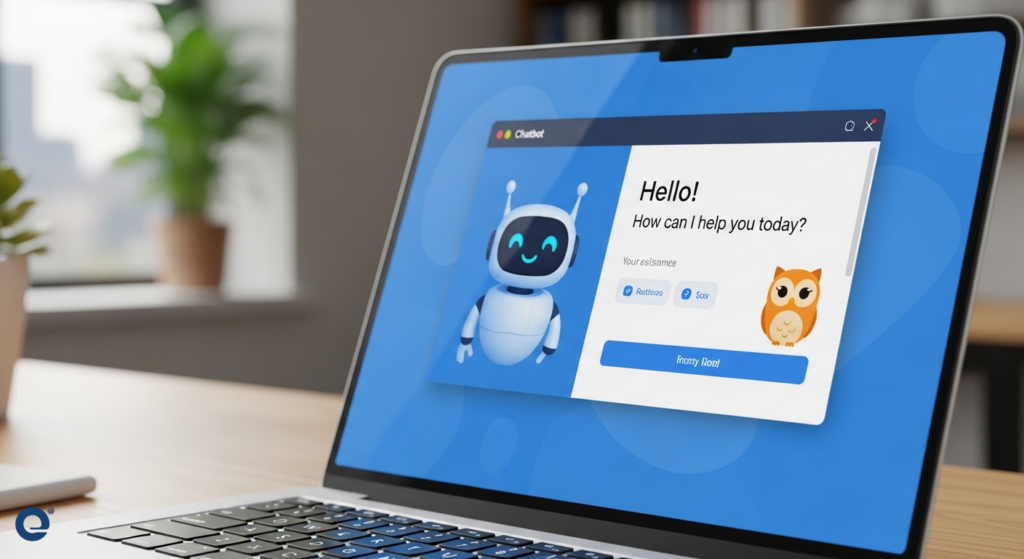
Chatbots and virtual assistants offer 24/7 support. They enhance user experiences and reduce the burden on human agents. Platforms like boost.ai leverage AI for these functions.
### Automating Processes for Efficiency
AI drives operational efficiency by automating repetitive tasks. This frees up human agents for more complex issues. It also optimizes resource allocation and reduces waste.
#### Document Processing Automation
AI-powered bots automate tasks like data entry and invoice processing. UiPath’s bots are known for improving productivity in this area.
#### Streamlining Workflows
AI can analyze customer interactions to identify bottlenecks. It then suggests improvements to streamline workflows. This leads to faster service delivery.
## Benefits of AI in Customer Service
Implementing AI in customer service yields numerous advantages for businesses. These benefits directly impact customer satisfaction and operational costs.
### Increased Productivity and Reduced Costs
By automating tasks, AI significantly boosts employee productivity. This allows teams to handle more inquiries effectively. Furthermore, automation reduces operational costs associated with manual labor. For instance, chatbots can resolve a large volume of common queries instantly. This aligns with broader efforts to optimize operational efficiency, similar to how businesses might approach understanding operational costs in other areas.
### Enhanced Customer Satisfaction
AI enables faster response times and more personalized interactions. Predictive analytics help anticipate customer needs before they arise. This proactive approach leads to higher satisfaction levels. Customers appreciate quick resolutions and feeling understood.
### Data-Driven Insights and Decision Making
AI tools analyze vast amounts of customer data. This provides valuable insights into trends, preferences, and pain points. Businesses can use this information to make informed decisions about product development and service improvements. For example, sentiment analysis tools can gauge customer feelings about a brand .
## Implementing AI in Customer Service: Key Considerations
Adopting AI requires careful planning and execution. Understanding the challenges and best practices is essential for success.
### Challenges in AI Adoption
While the benefits are clear, businesses face hurdles. These include initial investment costs, the need for skilled personnel, and data privacy concerns. Integrating AI seamlessly with existing systems is also a common challenge.
### Strategies for Successful Implementation
A phased approach is often best. Start with automating simple, repetitive tasks. Then, gradually introduce more complex AI functionalities. Training your existing staff to work alongside AI is also critical. Moreover, ensuring data security and compliance with regulations is paramount. For businesses looking to manage costs effectively, exploring tools for cost control is always beneficial, such as those discussed in articles on FinOps fundamentals.
## Real-World AI Applications in Customer Service
Many companies are already leveraging AI to transform their customer service. These examples demonstrate AI’s versatility and impact.
### Chatbots for Instant Support
Companies use AI-powered chatbots to answer frequently asked questions. They also guide customers through processes. This provides immediate assistance, improving the customer journey.
### AI for Ticket Routing and Prioritization
AI systems can analyze incoming support tickets. They then automatically categorize and route them to the appropriate department or agent. This ensures faster resolution for urgent issues.
### Sentiment Analysis for Proactive Engagement
AI can monitor social media and customer feedback. It identifies the sentiment expressed towards a brand or product. This allows companies to proactively address negative feedback or capitalize on positive trends.
### Personalization at Scale
AI enables personalized recommendations and offers. It analyzes past interactions and preferences to tailor the customer experience. This creates a more engaging and relevant service.
## The Future of AI in Customer Service
The evolution of AI promises even more sophisticated customer service solutions. We can expect AI to become more intuitive and integrated.
### Advanced Personalization
Future AI systems will offer hyper-personalization. They will understand individual customer nuances and predict future needs with greater accuracy.
### Proactive Problem Solving
AI will move beyond reactive support. It will identify potential issues before they impact customers. This includes predicting system failures or service disruptions.
### Human-AI Collaboration
The role of human agents will evolve. They will focus on complex problem-solving and empathetic interactions. AI will act as a powerful assistant, augmenting human capabilities. This collaborative model ensures the best of both worlds: efficiency and human touch.
## Frequently Asked Questions About AI in Customer Service
Here are answers to common questions about integrating AI into customer service operations.
What is the main benefit of using AI in customer service?
The primary benefit is significantly enhanced efficiency through automation, leading to faster response times, reduced operational costs, and improved agent productivity.
Can AI completely replace human customer service agents?
No, AI is best viewed as a tool to augment human capabilities. While it can handle routine tasks, complex issues and empathetic interactions still require human intervention. The goal is often a collaborative model.
What are the biggest challenges when implementing AI in customer service?
Key challenges include the initial investment, the need for specialized skills, data privacy concerns, and ensuring seamless integration with existing systems.
How does AI improve customer satisfaction?
AI improves satisfaction by providing quicker resolutions, offering personalized experiences, and enabling proactive support that anticipates customer needs.
What are examples of AI technologies used in customer service?
Common examples include chatbots, virtual assistants, natural language processing (NLP) for understanding queries, and machine learning for predictive analytics and sentiment analysis.
## Conclusion
Artificial intelligence is a transformative force in customer service. By automating tasks, providing deep insights, and enabling personalized interactions, AI empowers businesses to deliver exceptional customer experiences. For Customer Success Leads and IT Managers, embracing AI is not just an option but a strategic imperative. As AI continues to evolve, its role in shaping efficient, customer-centric service operations will only grow. Investing in AI today means building a more competitive and customer-focused business for tomorrow.
